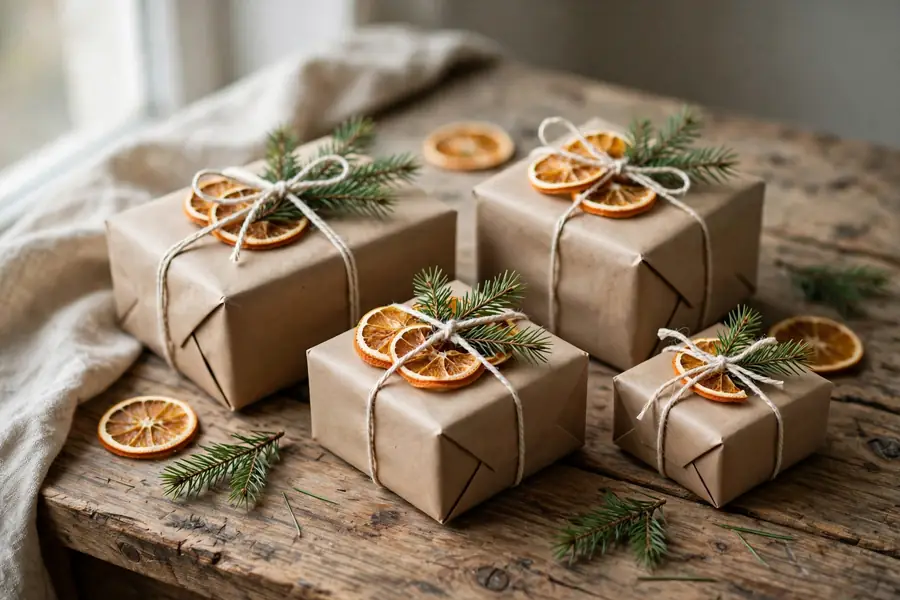
25 Christmas Gift Wrapping Ideas That Make the Gift Feel Twice as Special
There is a particular kind of quiet that settles over a house in December when the wrapping begins. The shopping is done, the list is folded away, and all that is left is the slow work of making each gift look like it was chosen with care. I like to put on something soft to listen to, clear the kitchen table, and take my time. Wrapping is not a chore to rush through the night before Christmas. It is the last, gentle part of giving.
I have never been one for foil paper that tears if you look at it wrong or for bows that arrive pre-made in a plastic sleeve. My drawer holds brown kraft paper, a ball of twine, a pair of sharp scissors, and a few things gathered from the garden and the kitchen. A sprig of rosemary costs nothing and smells like December itself. A dried orange slice, thin and amber, looks like it belongs on a gift rather than in a bin. These are small, ordinary materials, but in the right hands they turn a plain box into something worth pausing over.
The best wrapping does not shout. It does not need glitter or a dozen ribbons to prove that thought went into it. It whispers instead, through texture and a handwritten name and the faint scent of pine when the paper is lifted. If you love that slower, simpler way of doing things too, here are 25 christmas gift wrapping ideas to save for presents worth lingering over.
1. Brown Kraft Paper and Twine
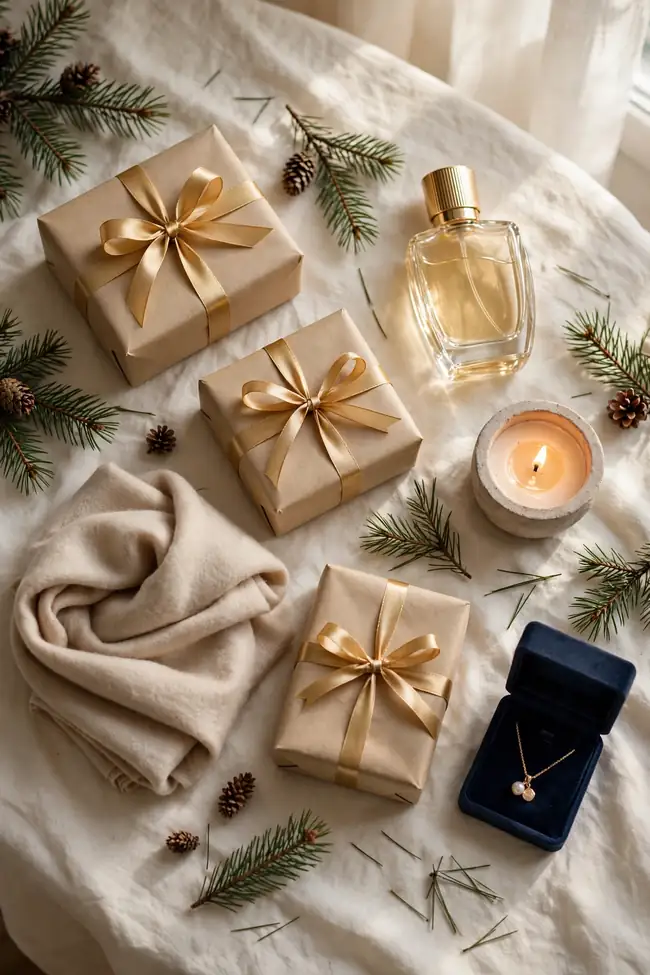
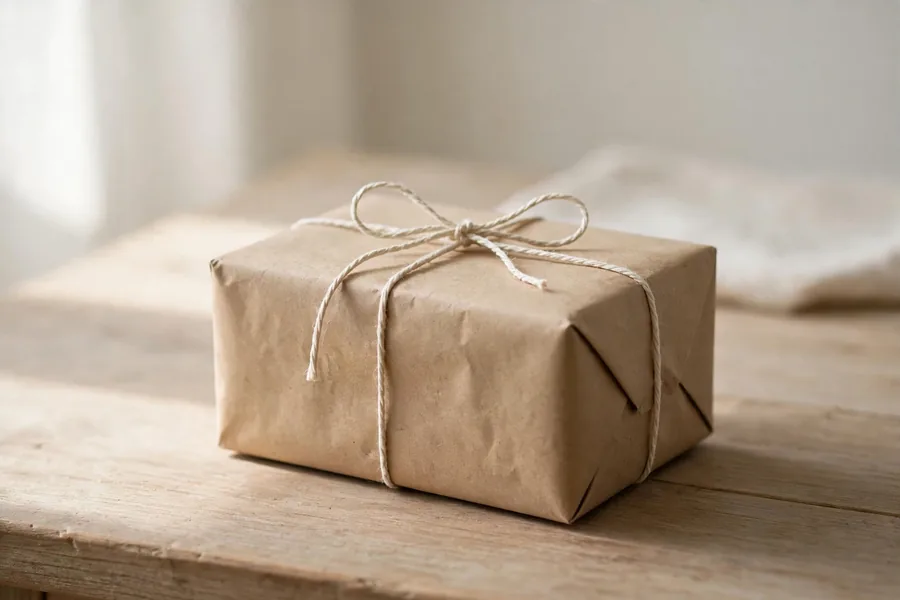
Start with the simplest combination of all, because it is still the one I reach for first. A roll of brown kraft paper, a length of cotton twine wrapped twice around the box and tied in a plain bow, and nothing else. The paper is sturdy enough to fold into crisp corners, and the twine gives it a handmade finish that shiny ribbon never quite manages. If the box is small, use thinner twine so the knot does not overwhelm it, and let the ends hang a little long for a relaxed look.
2. Dried Orange Slices
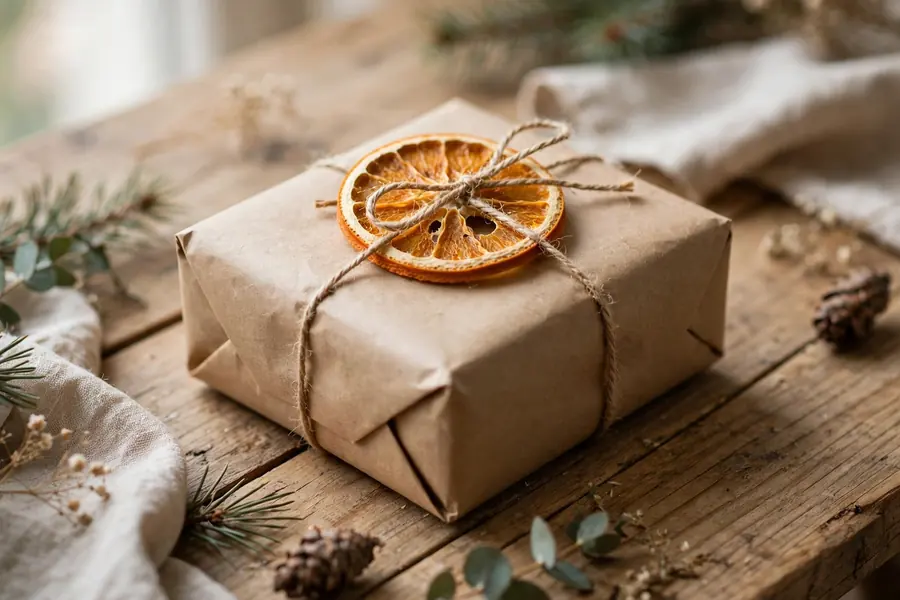
Dried orange slices are the kind of decoration that makes people ask where you bought them, and the answer is your own oven. Slice oranges thin, dry them low and slow until they are firm and translucent, and thread one onto twine or tuck it under a ribbon. Their amber color glows against brown paper and deep green wrapping alike. Make a batch in early December and keep them in a tin, because they keep for weeks and you will want them for every gift.
3. Fresh Greenery Sprigs
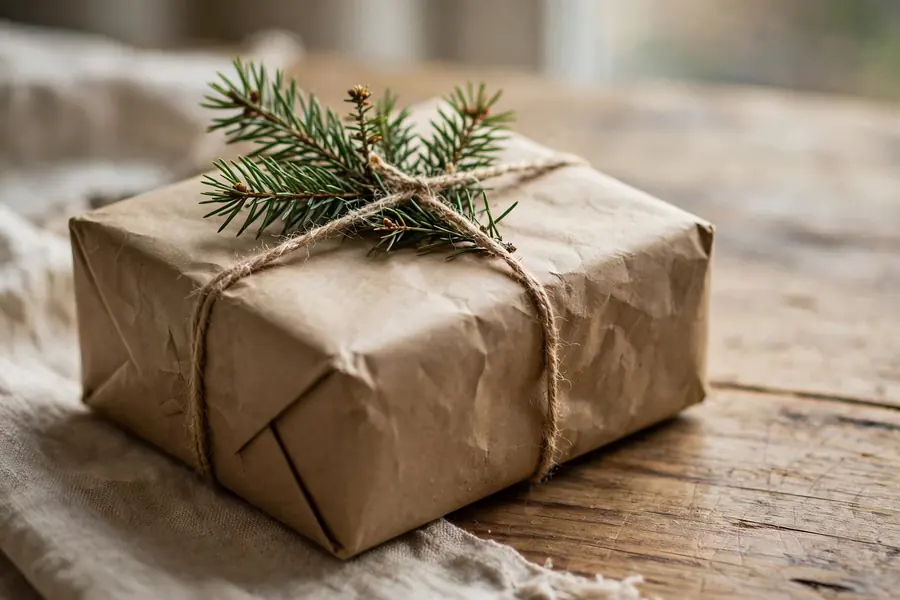
A walk around the garden or a quick stop at a market stall is all it takes to find the best wrapping decoration there is. A short sprig of pine, fir, eucalyptus, or rosemary slipped under twine adds color, texture, and a scent that no shop-bought bow can copy. Keep the sprig small so it does not get crushed in a pile of presents, and choose flat greenery like cedar for gifts that will be stacked. The greenery will dry slowly over the holidays, which only makes it look more natural.
4. Velvet Ribbon Bows
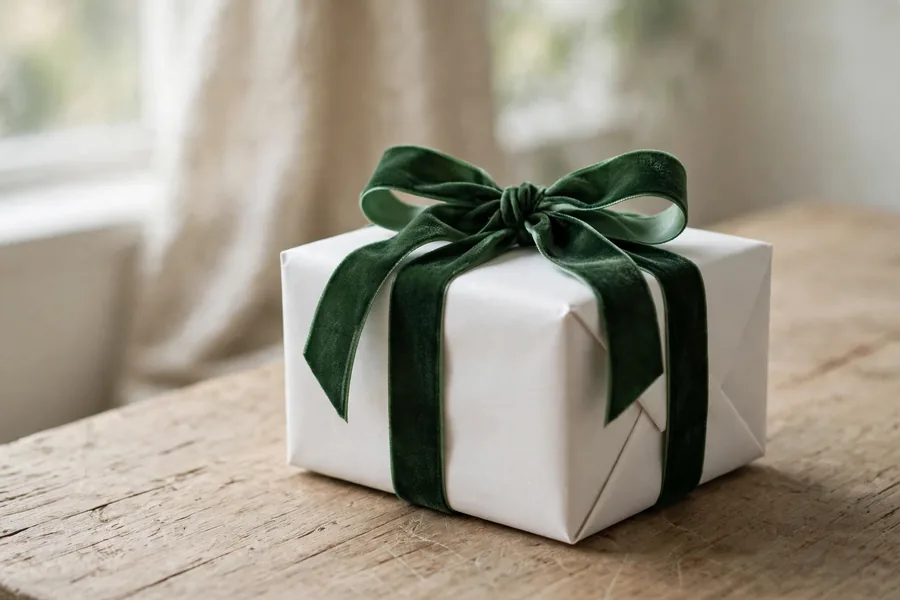
When a gift deserves a little softness, velvet ribbon is the answer. A wide velvet bow in forest green, burgundy, or dusty rose turns even plain white paper into something that feels considered and calm. Velvet holds its shape well, so the bow still looks good after the gift has sat under the tree for a week. Tie it a little loosely rather than pulling it tight, and let the ribbon tails fall naturally instead of curling them.
5. Fabric Wrapping
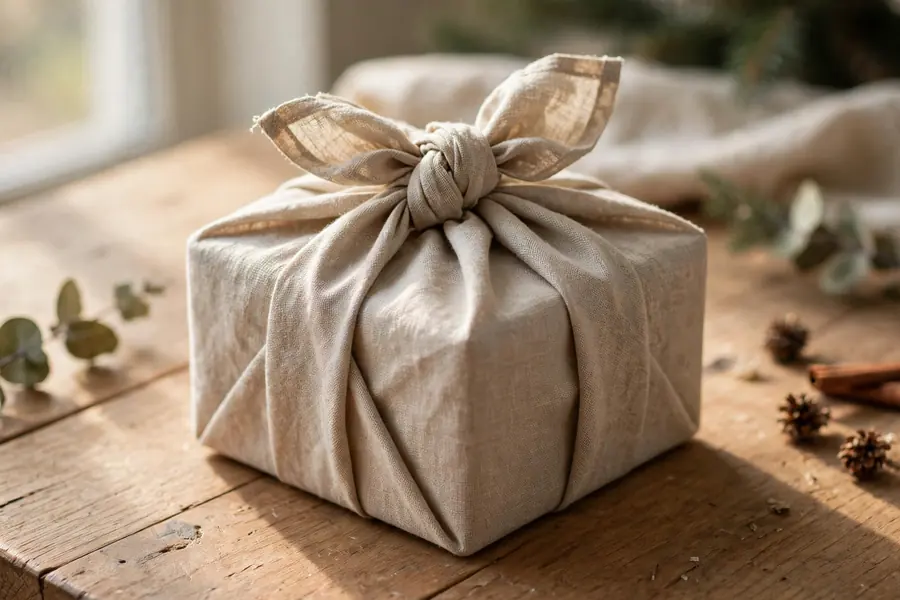
Fabric wrapping, known as furoshiki, is the oldest trick in this list and the most satisfying to reuse. Lay a square of cotton, linen, or a thrifted scarf flat, place the gift in the center, and fold the corners up and knot them. The cloth becomes part of the gift itself, something the recipient can use again long after the holidays. Choose patterns that suit the person, a quiet stripe for a minimalist friend, a soft floral for someone who loves vintage things.
6. Newspaper and Vintage Maps
Old newspapers and vintage maps make wrapping with a story built in. A page of newsprint feels nostalgic and unfussy, and a road map of a place that matters to the recipient, a honeymoon city or a hometown, turns the wrapping into a second gift. Pair newsprint with black twine and a plain white tag for a clean look, or use map paper with a red ribbon for a touch of warmth. Just avoid pages with heavy dark ink that might rub off on hands.

7. Hand-Stamped Kraft Paper
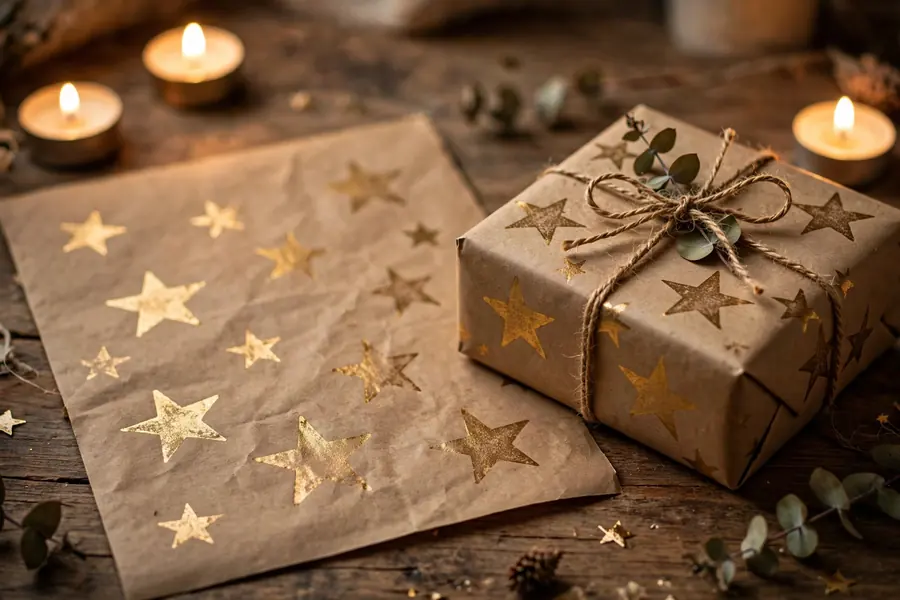
A few rubber stamps and an ink pad can turn plain kraft paper into something that looks like it came from a small stationery shop. Stamp stars, pine trees, or simple dots in a loose, uneven pattern, and do not worry about perfect spacing, because the charm is in the irregularity. You can stamp a whole roll in an evening while listening to music, and the paper will be ready for every gift on your list. Gold ink on kraft is especially lovely in candlelight.
8. Hand-Written Tags
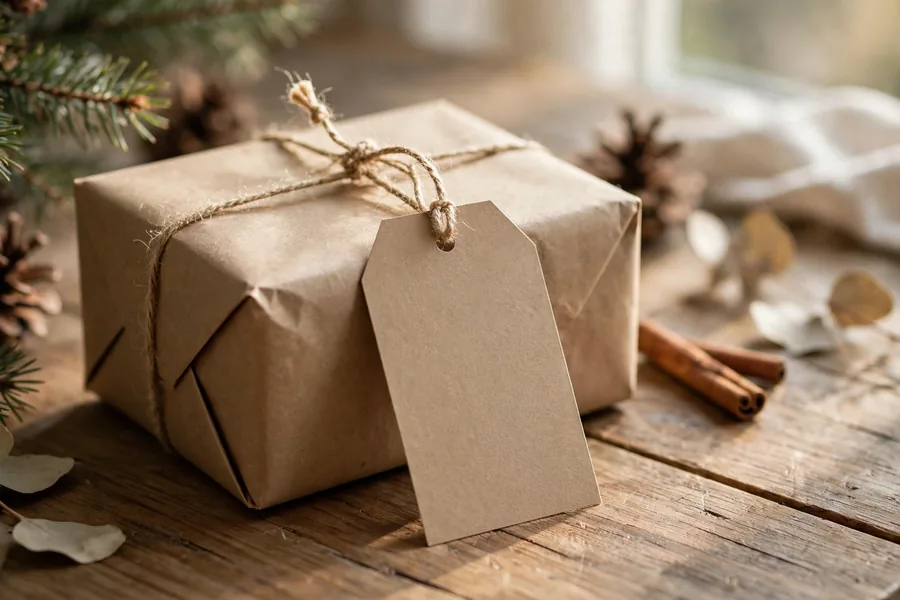
A hand-written tag is a small thing that changes the whole feeling of a gift. Cut tags from card offcuts, punch a hole in the corner, and write the name in your own handwriting, even if you think it is not fancy enough. A few words more than the name, a short line about why you chose the gift, makes the tag something worth keeping. When you have spent time choosing something thoughtful, perhaps with the help of a list of holiday gift ideas for her, a personal tag is what ties the thought and the wrapping together.
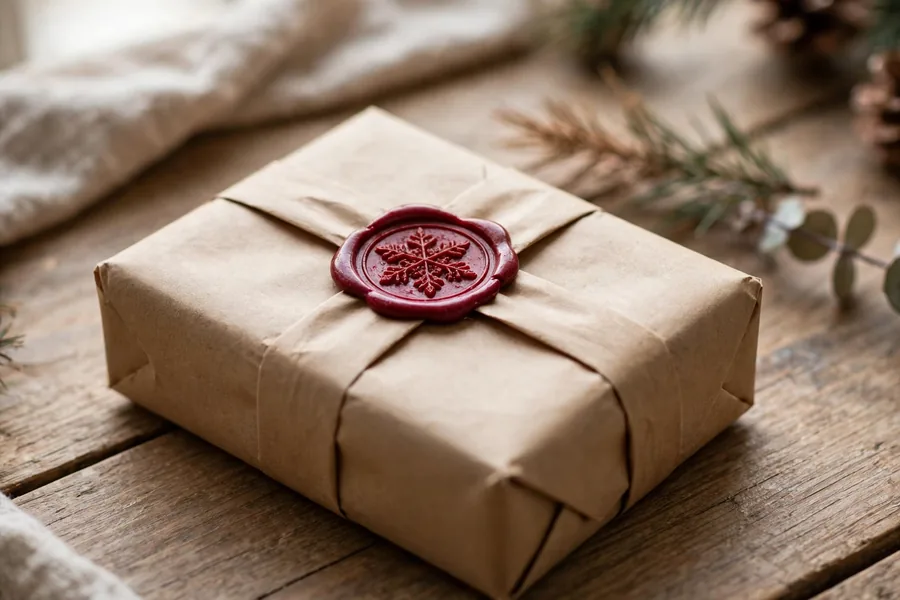
9. Wax Seals
Wax seals belong to letters, but they work beautifully on gifts too. Melt a stick of sealing wax, drip it onto the folded paper or onto a tag, and press a simple seal, an initial or a star, into the warm wax. The seal holds a ribbon in place and gives the gift an old-fashioned, deliberate feel. Deep red or forest green wax looks best against kraft paper, and a single seal is enough, because two starts to look fussy.
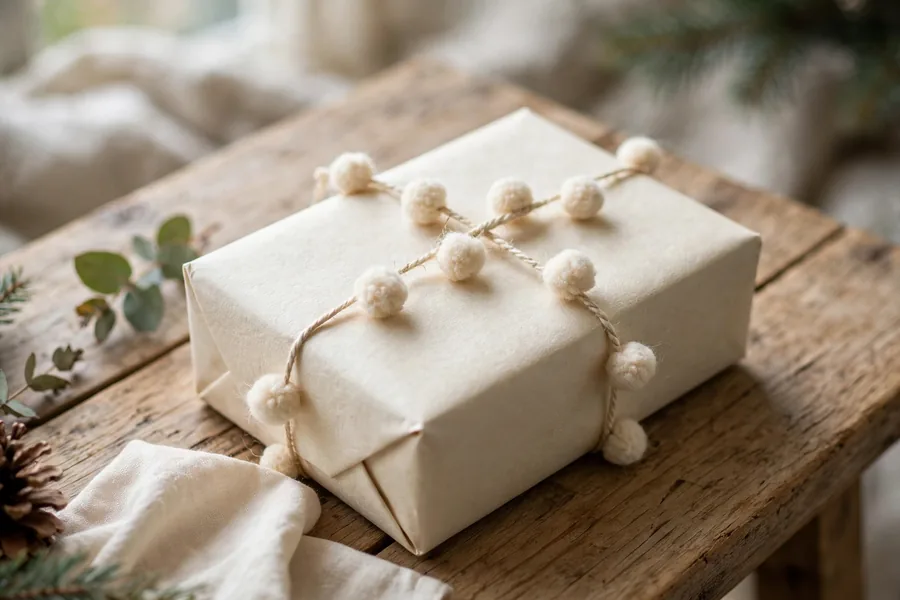
10. Pom-Pom Trim
Pom-poms add a soft, playful touch without any glitter or plastic. Make small wool pom-poms in cream, rust, or sage green and thread them onto twine or glue them along a ribbon, and they bounce gently every time the gift is moved. They are especially good on gifts for children, but a single cream pom-pom on an adult’s gift looks surprisingly elegant. Keep them small, about the size of a coin, so the gift still stacks neatly.
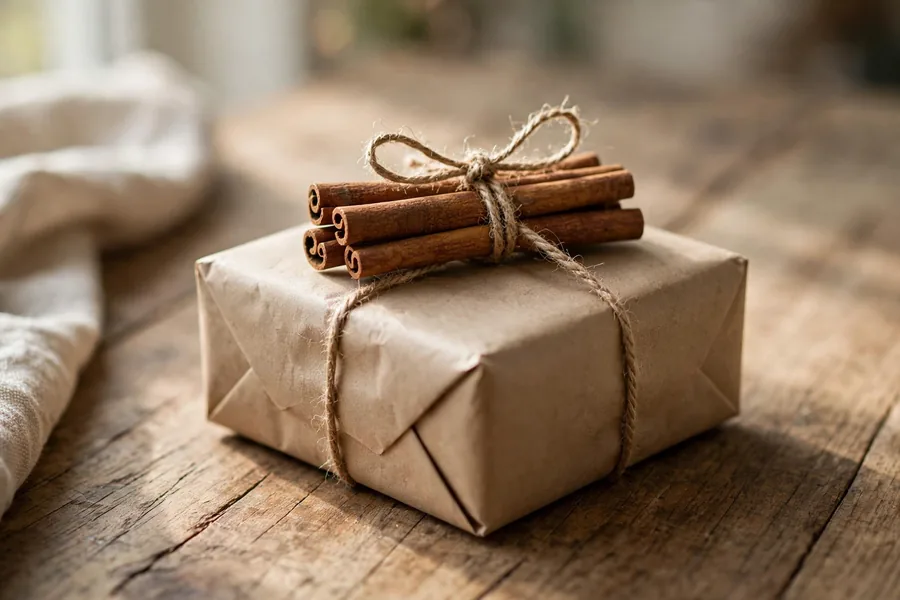
11. Cinnamon Sticks
Cinnamon sticks are the decoration that greets you before you even see the gift. Tie two or three short sticks together with twine and lay the bundle across the top of a wrapped box, or thread a single stick onto the ribbon. They smell like baking and December mornings, and they last for months, so the recipient can tuck them into a drawer or a simmer pot afterwards. They pair especially well with dried orange slices and a sprig of rosemary.
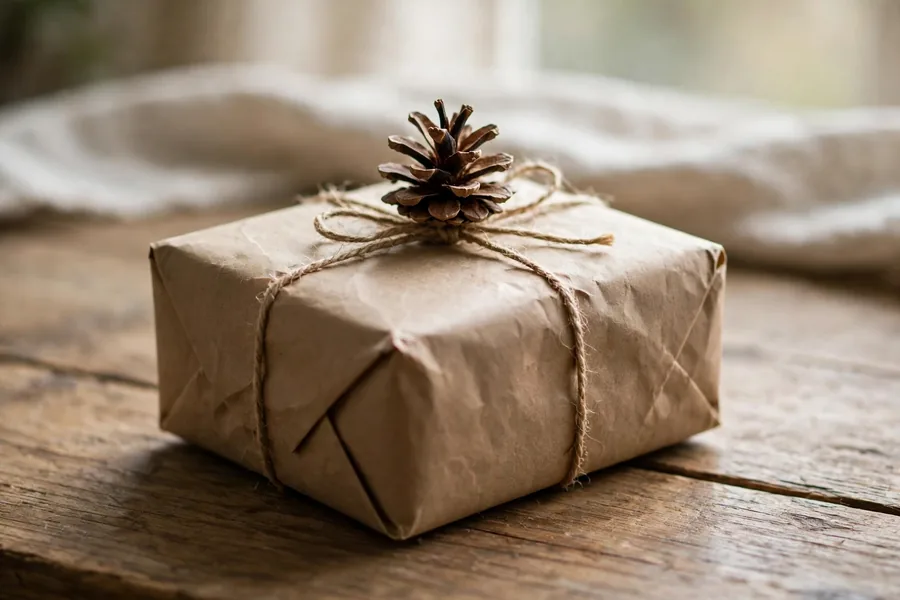
12. Pinecones
A small pinecone, gathered on a walk and brushed clean, is a decoration that costs nothing and looks like it came from a woodland cabin. Attach it with a dab of hot glue or wire it to the twine so it sits upright on top of the gift. Tiny pinecones work best, because large ones make the gift awkward to stack and prone to rolling off. Dust one lightly with flour or powdered sugar effect paint if you want a frosted look, but plain and natural is usually better.
13. Recycled Paper Bags
A plain paper bag, turned inside out or left as it is, is a perfectly good wrapping for an awkward gift. Fold the top down twice, punch two holes, thread twine through, and add a tag and a sprig of greenery. This is the wrapping I use for bottles, jars, and anything that refuses to sit squarely in a box. It looks intentional rather than last-minute when the fold is crisp and the decoration is simple, and it saves a bag from the recycling bin.
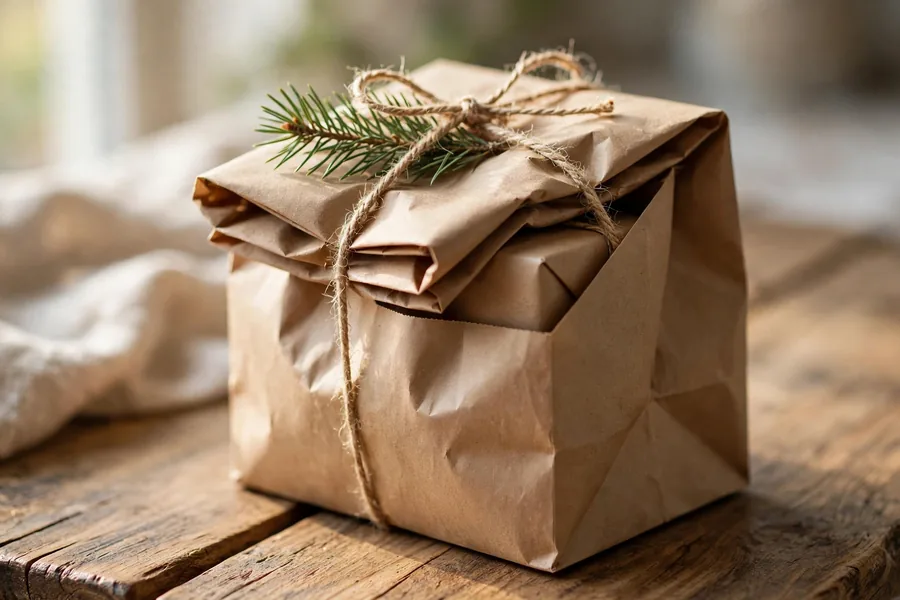
14. Muslin Drawstring Bags
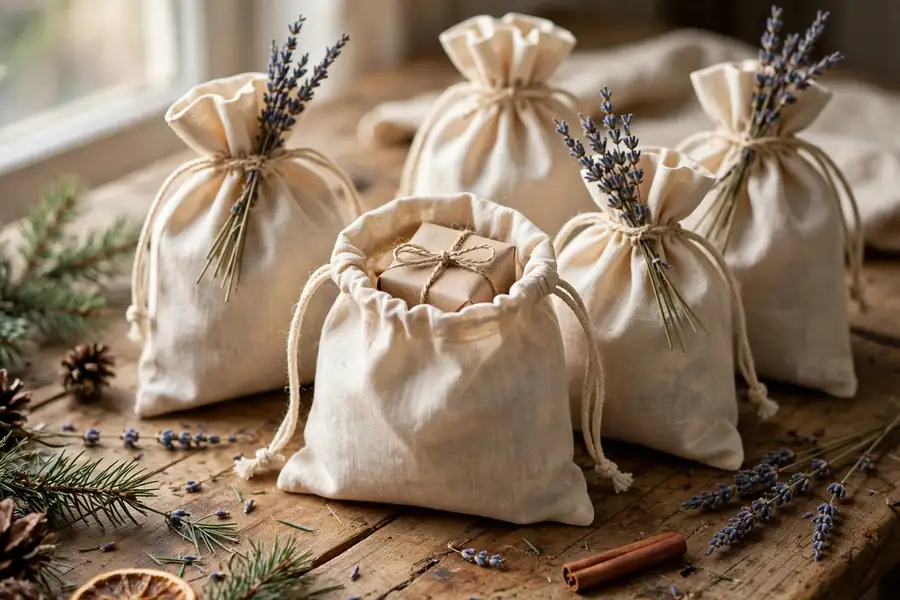
Muslin drawstring bags are the gentlest way to wrap small, delicate gifts. Slip jewelry, candles, or a handmade soap inside, pull the drawstring closed, and tie a sprig of dried lavender to the cord. The bag itself becomes part of the gift, useful for storing small things all year, and it needs no tape, no scissors, and no fuss. Buy them plain in bulk and stamp or stencil a small star on each one for a personal touch.
15. Jars and Tins
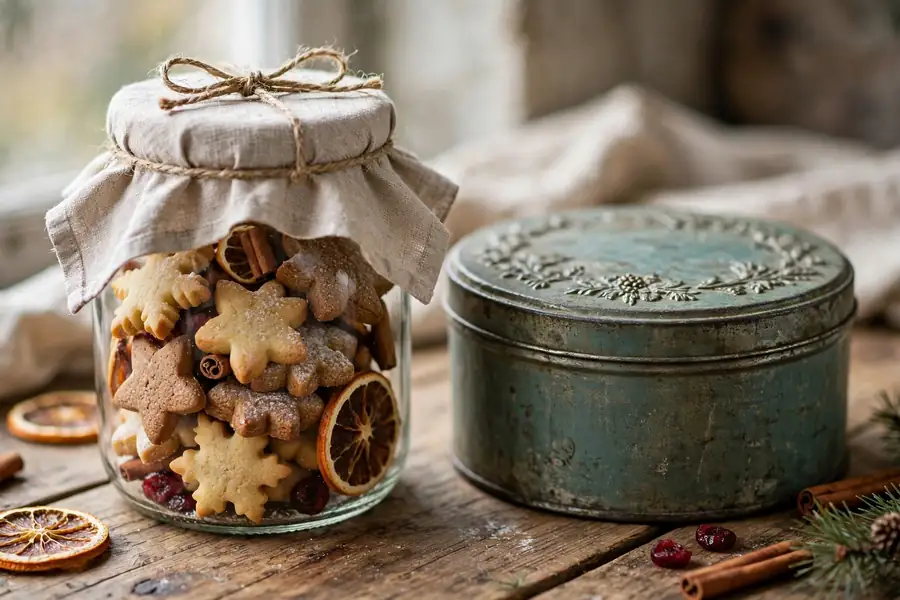
Some gifts do not need paper at all, because the container is the wrapping. A clean glass jar with a cloth cover tied over the lid, or a vintage tin lined with tissue, holds homemade treats, small ornaments, or bath salts beautifully. Add a hand-written label and a length of twine around the neck, and the gift looks like something from a farm shop. The recipient keeps the jar or tin, which is the quiet point of reusable wrapping.
16. Odd-Shaped Gifts
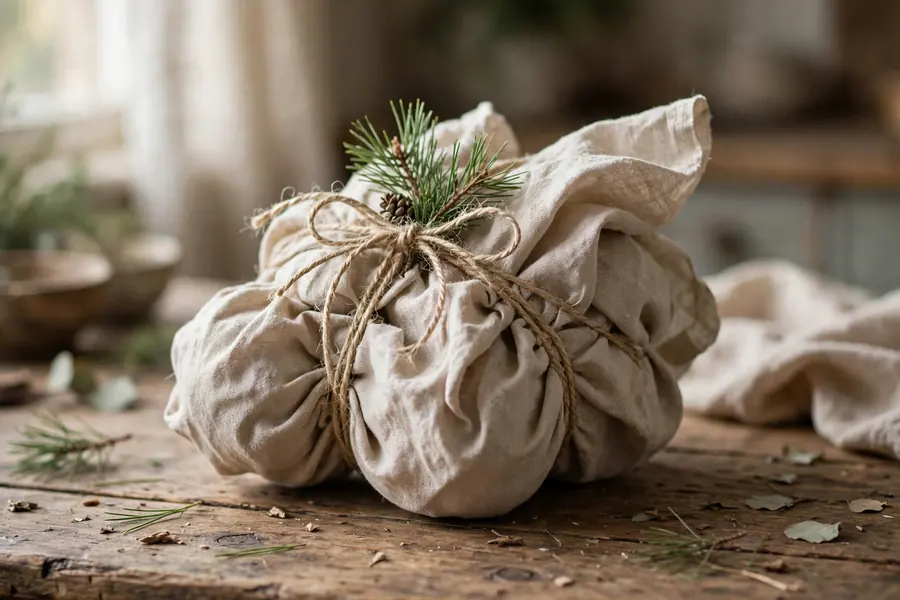
Odd-shaped gifts, a scarf, a plant, a bottle, a soft toy, are the ones that make people groan at the wrapping table, but fabric is the answer every time. A square of cloth wraps around any shape without a single fold going wrong, and the knots become the decoration. For a bottle, gather the cloth at the neck and tie it with twine and a sprig of greenery. For something soft and lumpy, a drawstring bag or a tea towel does the same job with even less effort.
17. Kids’ Drawings as Wrap
Let children decorate the wrapping paper themselves, and the gift becomes a keepsake before it is even opened. Give them a roll of plain kraft paper, some crayons or watercolors, and no instructions beyond drawing Christmas things. Their uneven stars and lopsided trees are far more charming than any printed paper, and grandparents in particular will want to keep the wrapping. Keep a roll of their decorated paper aside for the gifts that matter most.

18. White on White Minimal Wrap
For the minimalist on your list, white on white is wrapping at its calmest. Matte white paper, a white satin or grosgrain ribbon, and a plain white tag with the name written in soft grey ink. Nothing else. The effect depends entirely on crisp folds and clean edges, so take your time with the corners and use double-sided tape so no tape shows. This is the wrapping equivalent of a quiet room, and it photographs beautifully under the tree.
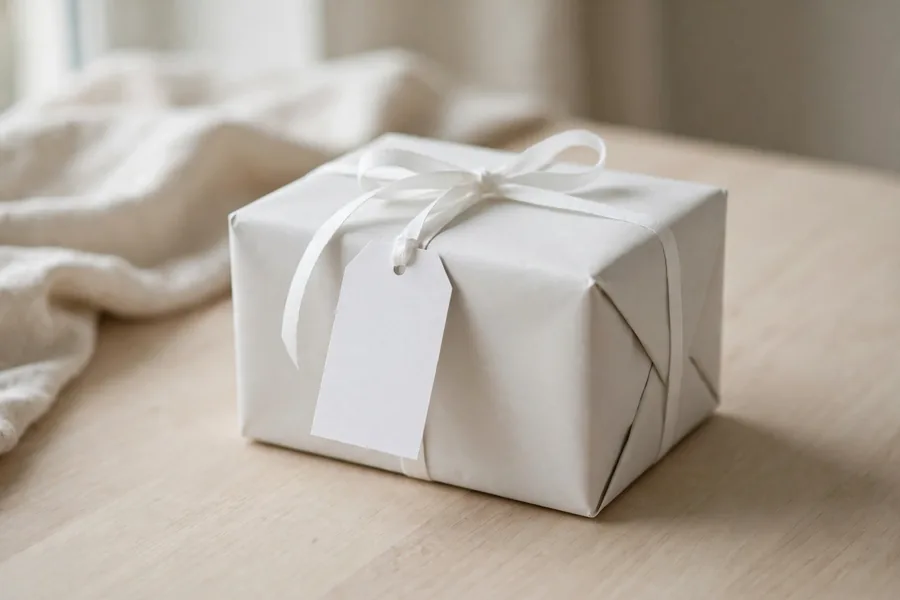
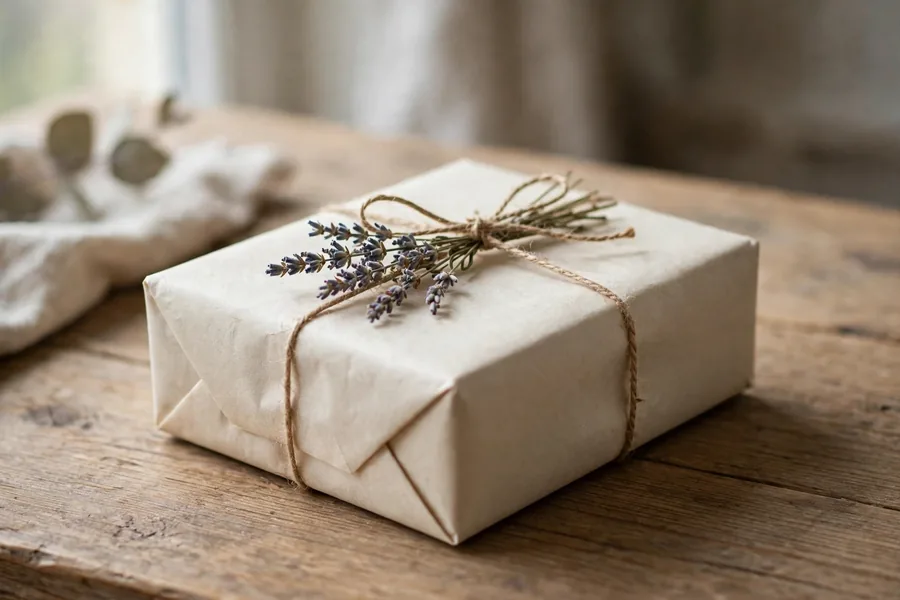
19. Dried Flowers and Lavender
Dried flowers bring a softness to wrapping that fresh greenery cannot quite match. A small bunch of dried lavender, a stem of statice, or a few tiny dried daisies tied with twine looks delicate against kraft or cream paper. They are light, so they will not weigh down the ribbon, and they keep their shape long after Christmas. Tuck the stems under the twine rather than gluing them, so the recipient can slip them out and keep them.
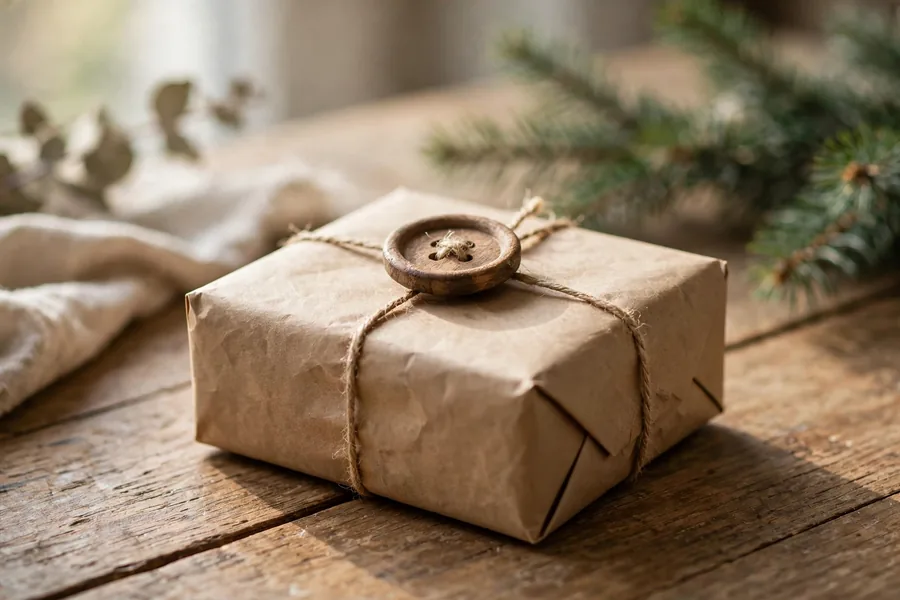
20. Button and Bead Closures
A beautiful button or a single wooden bead can replace a bow entirely. Thread twine through the buttonholes and tie it across the top of the gift, or slide a bead onto the ribbon and knot it in place. This is a lovely way to use buttons saved from old coats or beads from a broken necklace, and the recipient can reuse them afterwards. Choose natural materials, wood, horn, or mother-of-pearl, to keep the look calm and tactile.
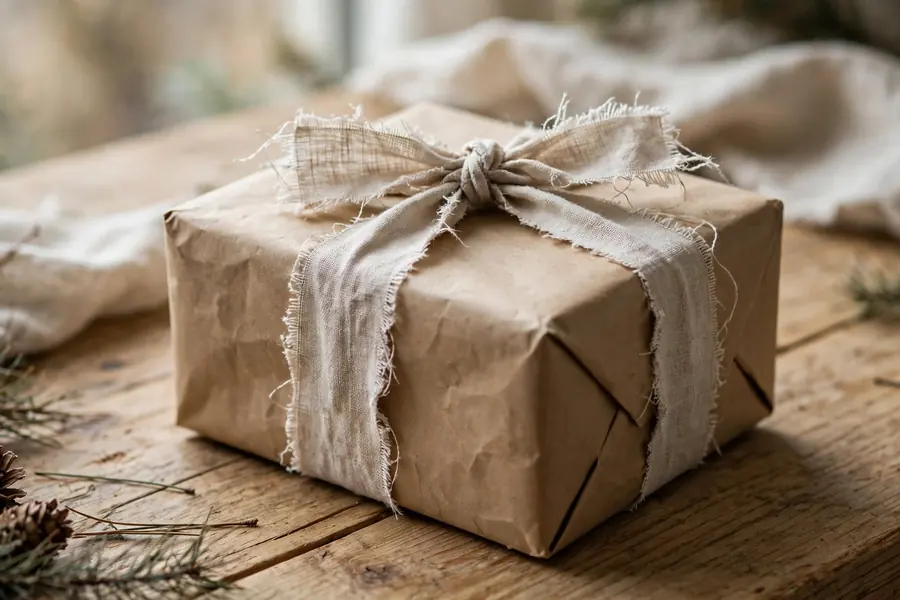
21. Torn Fabric Strips
Torn fabric strips, rather than cut ribbon, give wrapping a soft, relaxed edge that suits the slow-living table perfectly. Tear a strip of linen, cotton, or old muslin along the grain, and the frayed edge becomes part of the look. Wrap it around the gift twice and knot it loosely, letting the ends fall where they will. Muted colors work best, sage, oatmeal, dusty rose, and the strips can be washed and used again next year.
22. Black Paper with White Ink
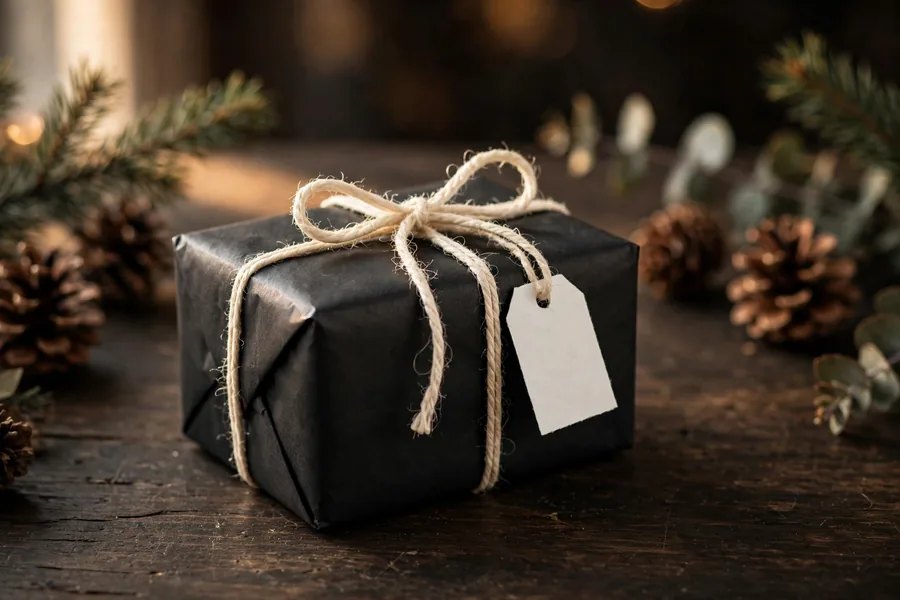
Black wrapping paper with white ink is the dramatic cousin of kraft and twine, and it suits evening gifts and grown-up lists. Wrap in matte black paper, tie with cream twine or a thin gold ribbon, and write the name on the tag in white gel pen. You can also draw simple white stars or dots directly on the paper for a snowy-night effect. Keep the decoration minimal, because the contrast of black and white does most of the work on its own.
23. Tea Towels as Wrap
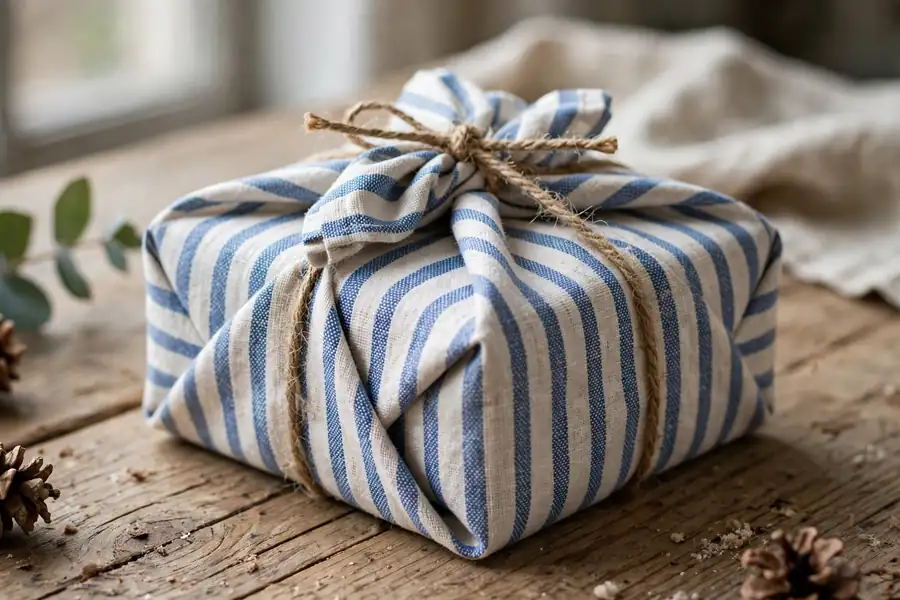
A tea towel is wrapping that doubles as a useful gift in itself. Lay the towel flat, place the gift in the center, fold the corners over, and tie them with twine. It works beautifully for kitchen gifts, a cookbook, a jar of preserves, or a set of mugs, and the recipient gets two gifts in one. Choose a towel in a quiet pattern, a stripe or a simple botanical print, so the wrapping still feels like Christmas rather than a kitchen cupboard.
24. Layered Tissue and Kraft
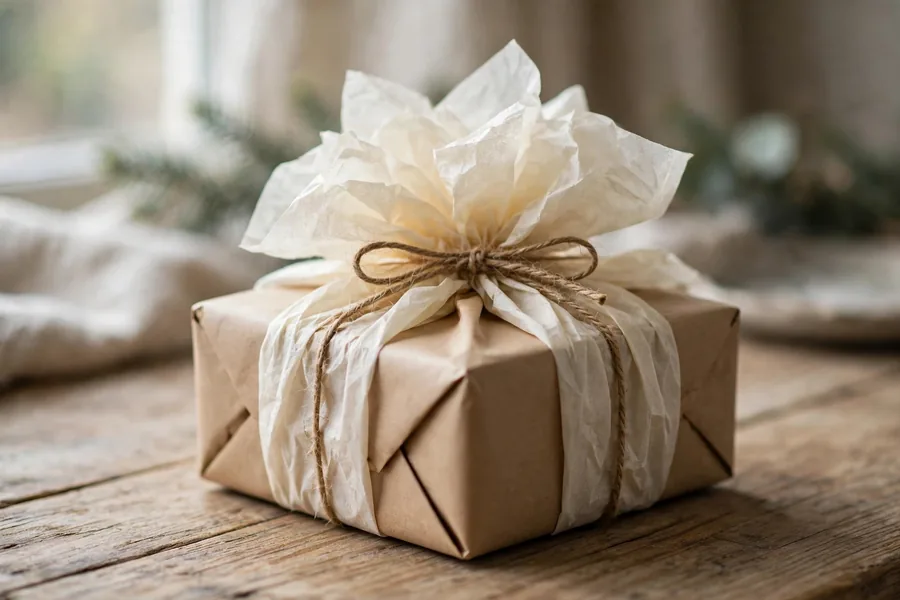
Layering tissue paper over kraft gives a gift a soft, cloud-like finish without any fuss. Wrap the box in kraft first, then lay a sheet of tissue, cream or sage green, loosely over the top and gather it with twine. The tissue wrinkles gently and catches the light, which makes even a small gift look generous. This is a good trick for gifts that are a little plain on their own, because the layering adds depth without adding clutter.
25. A Sprig of Rosemary and a Note
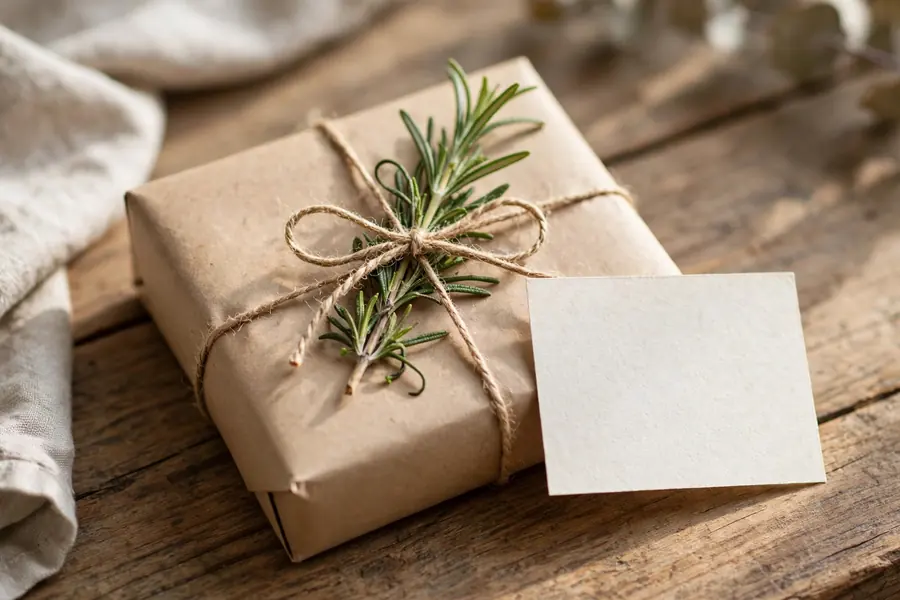
The last idea is also the simplest, and it is the one I come back to every year. Wrap the gift in plain kraft paper, tie it with twine, tuck a single sprig of rosemary under the knot, and slip a short handwritten note beneath the twine. The note can say one honest sentence, why you thought of them, or a memory from the year. It costs nothing, takes a minute, and it is the part of the gift people remember long after the paper is gone.
7 Wrapping Supplies Worth Keeping in a Drawer
- A roll of brown kraft paper, wide enough for your largest usual gift, because it suits every idea on this list.
- A ball of natural cotton twine, plus a thinner spool for small boxes and tags.
- Sharp scissors and a roll of double-sided tape, for crisp folds and invisible joins.
- A small tin of dried orange slices, cinnamon sticks, and pinecones, gathered or made in early December.
- A few lengths of velvet ribbon in forest green and burgundy, for gifts that deserve softness.
- Plain card tags and a pen you like writing with, because hand-written names beat printed labels every time.
- A jar of wax seals or a glue gun, for the finishing touch that makes a gift feel deliberately made.
How to Choose the Right Christmas Gift Wrapping
Start with the person, not the paper. A minimalist friend will love plain kraft and a sprig of rosemary far more than glitter and three ribbons, while a child will light up at wrapping they helped decorate. Think about where the gift will sit, too, because a gift that travels in a suitcase needs sturdy paper and flat decorations, while a gift that goes straight under the tree can carry a pinecone or a pom-pom without worry. Matching the wrapping to the person is what turns a nice gift into a thoughtful one.
Then think about what you already have before you buy anything new. Most of us own a drawer of half-used ribbon, a roll of kraft paper, and a garden or market that can supply greenery for free. Wrapping from what is already in the house is not only kinder to the budget and the planet, it also looks more personal, because the materials carry a little of your own home with them. A single new purchase, a roll of good velvet ribbon or a set of plain tags, goes much further than a trolley full of matching sets.
Finally, keep it simple enough that you actually enjoy the process. If a wrapping idea takes an hour per gift and leaves you exhausted, it is not the right idea for a long list, no matter how beautiful it looks in a photograph. Choose two or three techniques you like, use them across all your gifts, and let the small variations, a different sprig, a different tag, a different ribbon color, give each one its own character. The calm you feel while wrapping is part of the gift, and the recipient can tell.
Final Thoughts
Wrapping is the quietest part of Christmas, and I think that is why I love it so much. The house is still, the paper rustles, the twine pulls tight, and for a few minutes there is nothing to do but think about the person on the tag. In a season that can feel loud and hurried, that slowness is a gift in itself, both for the giver and, in some small way, for the person who unties the knot.
You do not need to try all twenty-five of these ideas, and you certainly do not need to buy anything special to start. Pick the one that made you pause, the dried oranges or the handwritten note or the plain brown paper, and try it on your very next gift. See how it feels to slow down for ten minutes and make something with your hands.
Which of these wrapping ideas will you try first, and what small, natural touch will you add to make it unmistakably yours?