
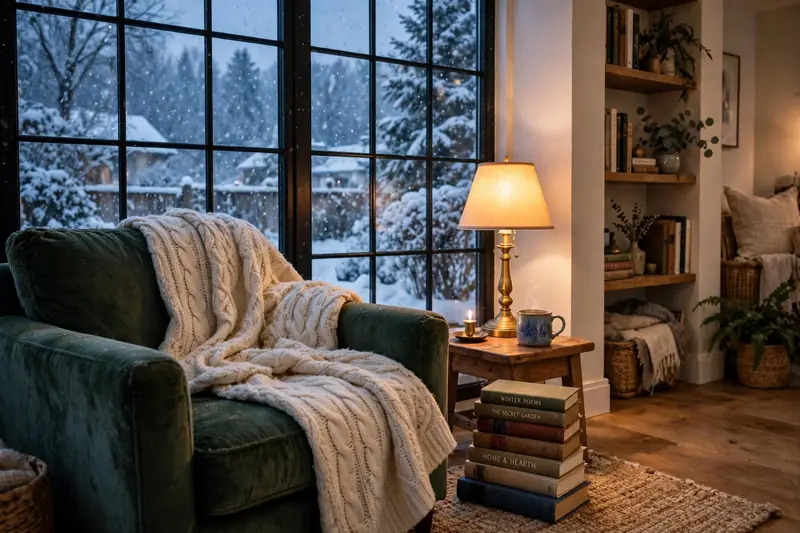
25 Cozy Winter Reading Nook Ideas for Slow Quiet Evenings
Winter has a way of narrowing the world down to one warm room, one good book, and the sound of wind against the glass. I have never needed a grand library to enjoy that feeling, only a chair that fits me properly, a lamp that does not glare, and a blanket I can pull up to my chin. The best reading nooks I have known were never the most expensive ones, they were the ones where somebody had thought about where the light falls at five in the afternoon.
I read slowly in winter, a chapter here and a chapter there, with tea going cold beside me and a pencil tucked into the spine for marking lines I want to keep. A nook does not have to impress anyone who walks past it, it only has to hold you still long enough to forget your phone for an hour. That is why I love small corners so much, because a small space asks you to choose only what you truly use: the right chair, the right light, and books within arm’s reach.
You do not need a spare room, a renovation, or a matching set of anything to make one. An unused corner, a wide windowsill, a closet you never quite filled, or the quiet end of a bedroom can all become the place you look forward to at the end of the day. So put the kettle on, fold a blanket over the arm of your favourite chair, and here are 25 cozy winter reading nook ideas to save for slow quiet evenings.
1. A Window Seat Piled With Cushions
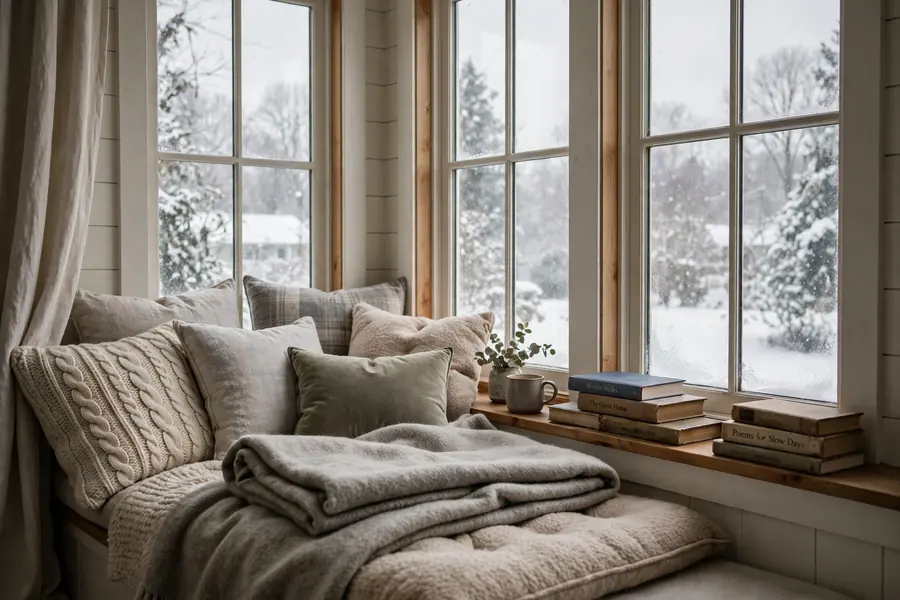
A window seat is the classic reading nook for a reason, because winter light through glass is soft, grey, and endlessly calming. Pile on cushions in different sizes so you can sit upright with a book or curl sideways with your knees up, and add a thick blanket that stays folded at one end. Keep a small stack of books on the sill itself, close enough to reach without standing, and let the cold outside make the warmth inside feel like a small luxury.
2. An Armchair Turned Toward The Window
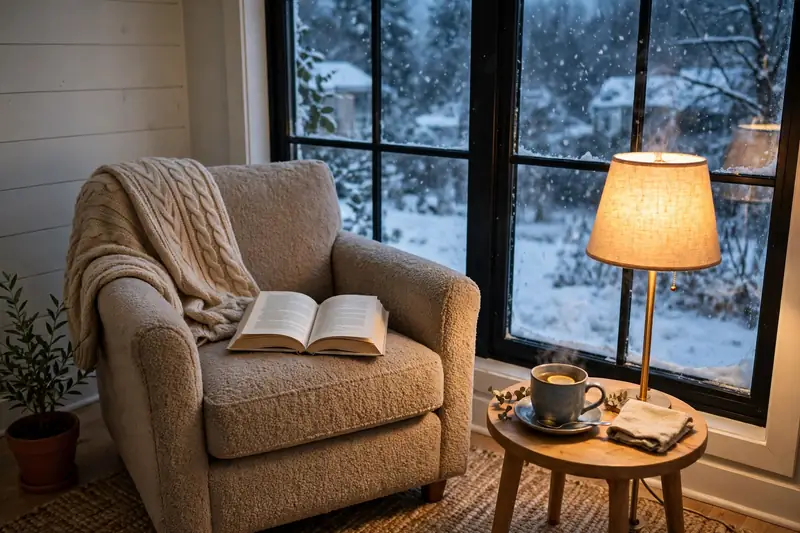
If you have no built-in seat, a single armchair angled toward the window does the same job with far less effort. Choose a chair with arms wide enough to rest a book on and a seat deep enough to tuck your feet up beside you. A floor lamp behind one shoulder keeps the pages lit without stealing the view, and a small side table holds tea and reading glasses. This is the nook for people who read in stolen half-hours, because it asks for almost nothing and gives back a whole evening.
3. A Fireside Chair For Long Chapters
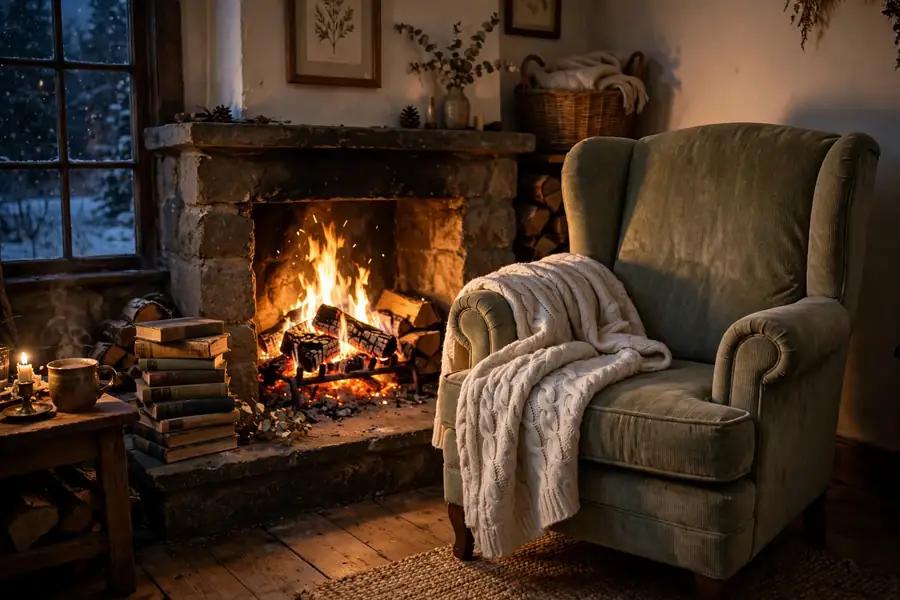
There is something about firelight that slows reading down in the best possible way, turning even a short story into an occasion. Place a deep armchair near the fireplace, but not so close that the heat dries your eyes, and keep a basket of logs or a folded throw beside it. The flicker gives the room a rhythm of its own, and the warmth means you will not need three blankets to stay comfortable. Save this corner for the longest book on your shelf, the one that deserves an unhurried evening.
4. A Closet Turned Into A Reading Hideaway
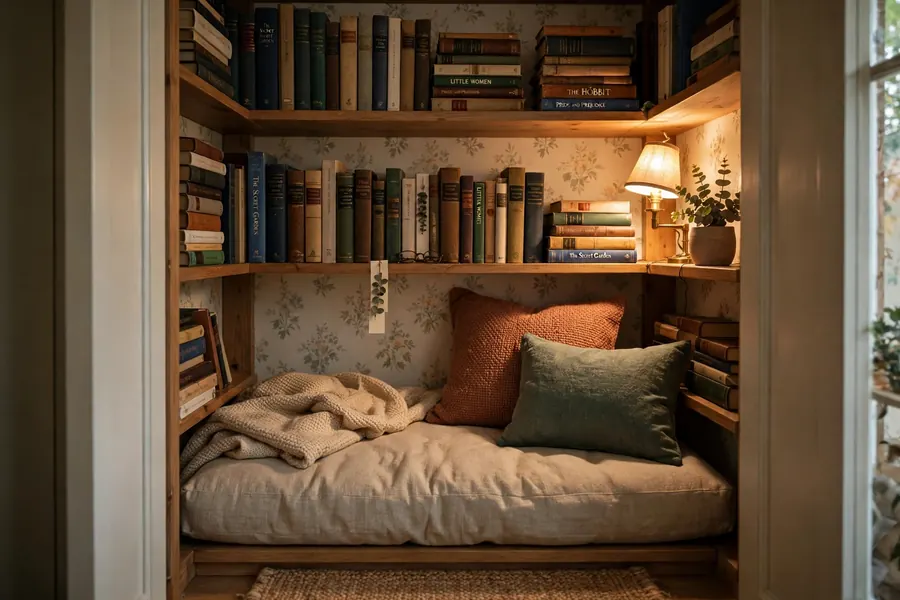
An empty closet, or one you can clear of half its clutter, makes a surprisingly perfect hideaway because it is already enclosed and quiet. Remove the door if you can, or leave it open, and line the back wall with a narrow shelf for books and a small lamp. A thick cushion on the floor, or a low bench if the space allows, turns the closet into a little room of its own. It feels secret in the loveliest way, like a place you found rather than a place you decorated.
5. An Under-Stairs Cubby For One Reader
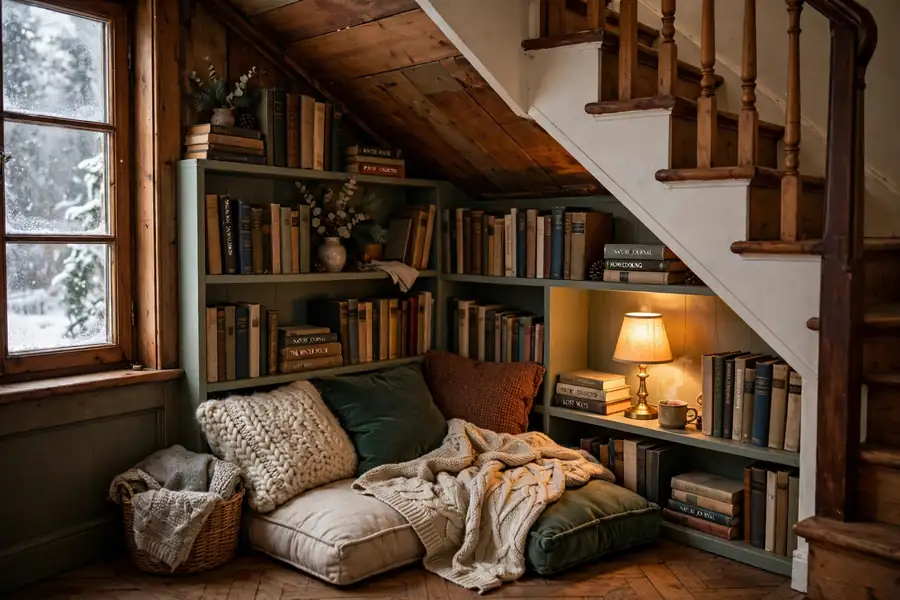
The space under the stairs is often wasted on boxes and coats, but it is exactly the right size for one reader and a stack of books. Tuck in a floor cushion or a low bench, add a battery lamp or a small wall light, and line the sloping wall with a few shelves cut to fit. The low ceiling makes the cubby feel sheltered rather than cramped, especially once a blanket is draped over the edge. It is proof that a nook does not need grandeur, only a little intention and a warm light.
6. A Bay Window Daybed For Afternoon Reading
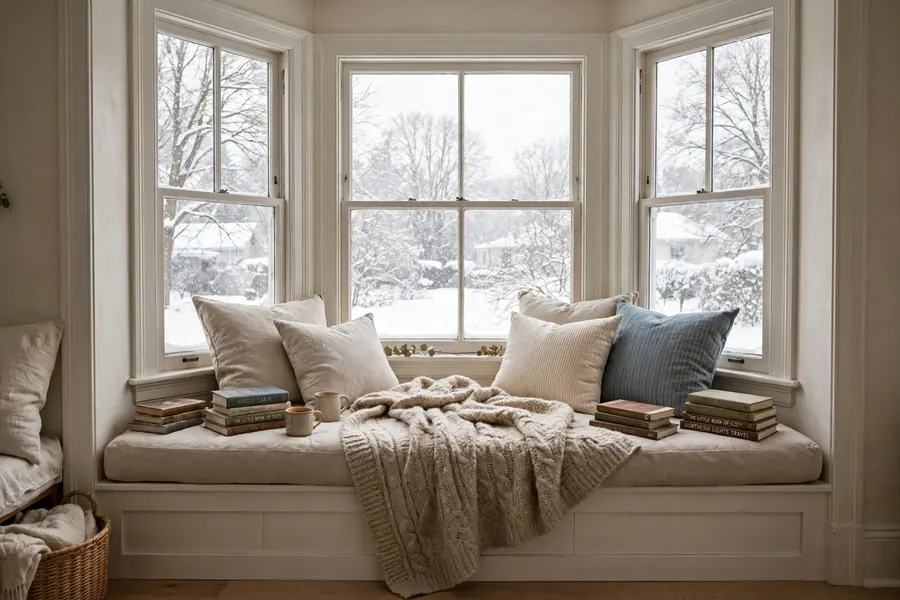
A bay window gives you light from three sides, which makes it the brightest nook in the house even on a dull winter day. Dress a daybed or a deep bench with a firm mattress, plenty of pillows, and a wool throw in a colour you love looking at. Store books in baskets underneath so the surface stays clear for sprawling, and keep a mug within reach on the sill. On snowy afternoons this is the closest thing to reading outside without ever feeling the cold.
7. A Hanging Chair In A Quiet Corner
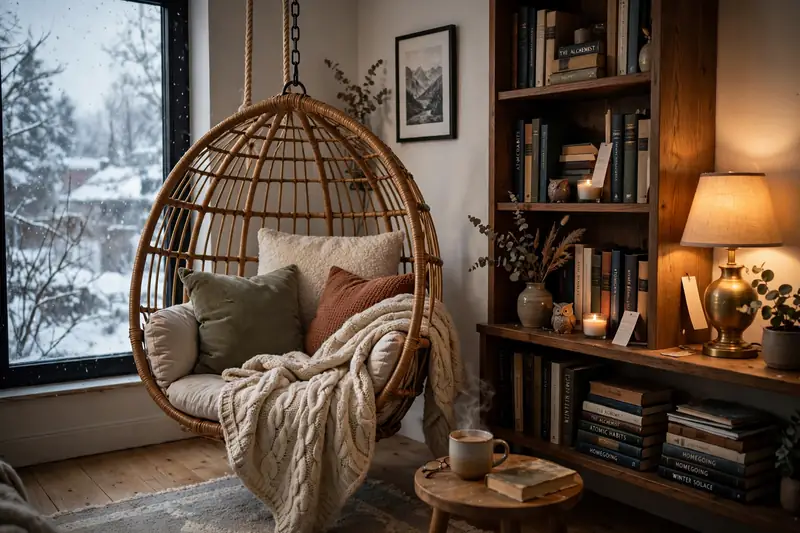
A hanging chair adds a gentle sway to reading, which sounds like a small thing until you try it on a restless evening. Hang it in a corner with enough room to swing slightly, and fill it with a round cushion and a soft blanket that wraps around you. The curved shape closes out the rest of the room, so even a busy household feels far away for a chapter or two. Add a small bookshelf nearby, because once you settle in, you will not want to get up to fetch the next book.
8. A Rocking Chair By The Heater
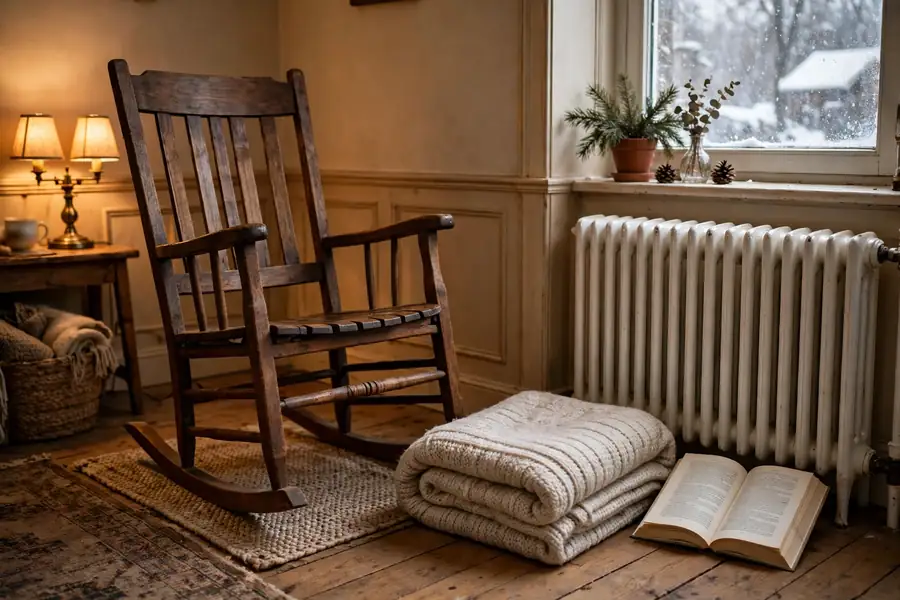
Rocking chairs get overlooked for reading, but their slow rhythm suits winter evenings and long, thoughtful books. Place one near a radiator or a heater, with a footstool close by and a blanket folded over the arm for when the room cools. The movement keeps you awake through denser chapters without ever feeling restless, and the wooden frame adds warmth that a modern chair sometimes lacks. This is the nook I would choose for poetry, essays, and books you want to read aloud in your head.
9. A Floor Cushion Nest For Sprawling Readers

Some readers never sit properly in a chair, and a floor cushion nest is made for them. Layer a thick rug, two or three large floor cushions, and a soft blanket, then prop yourself against the wall with a smaller cushion behind your back. The low setup makes the whole corner feel relaxed and a little bit childlike, in the best sense, and it costs almost nothing to try. Keep books in a low basket beside you, and you have a nook that can be packed away when guests arrive.
10. An Attic Eaves Nook Under Sloping Ceilings
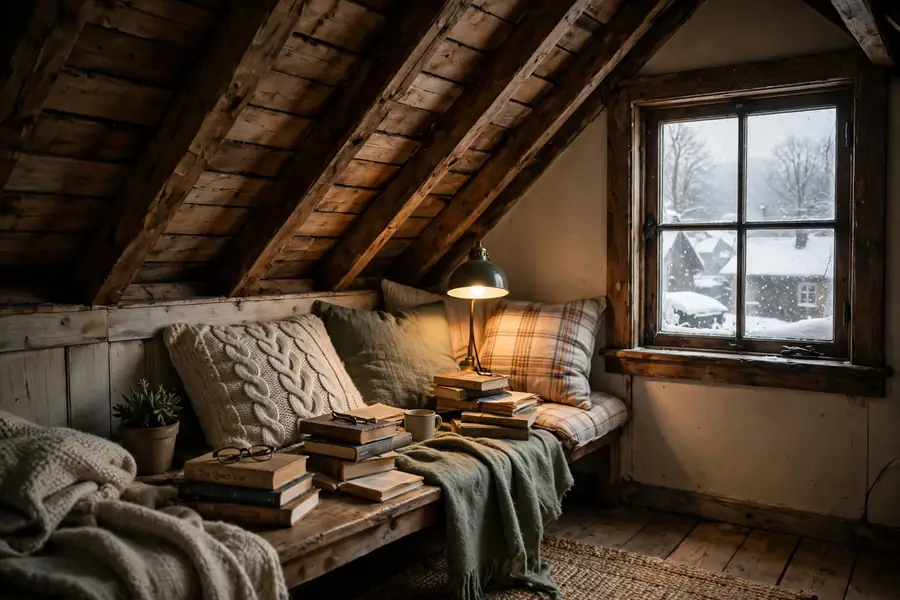
Attic eaves, with their sloping ceilings and odd angles, make reading feel like hiding in a treehouse. Fit a low bench or a mattress into the lowest part of the eave, and use the slope itself as a backrest with cushions piled against it. A small lamp clipped to a shelf or hung from a beam gives just enough light for the pages, and the rest of the room can stay dim. Winter is the best season for an attic nook, because the hush up there feels deeper when snow is falling outside.
11. A Bookshelf Alcove With A Bench Between The Shelves
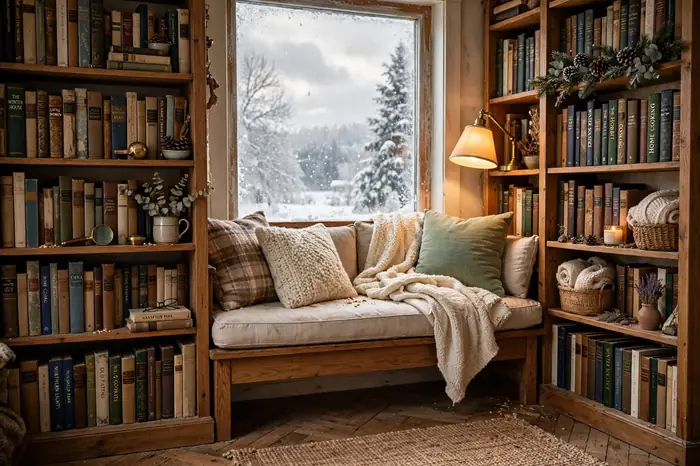
If you have two bookshelves with a gap between them, you already have the bones of a nook. Slide a bench into the gap, add a cushion and a reading lamp mounted on one shelf, and let the books themselves become the walls. Being surrounded by spines on both sides is wonderfully focusing, because every glance up reminds you what to read next. This works beautifully in a hallway or a living room corner, and it turns dead space between furniture into the most-used seat in the house.
12. A Bedroom Corner Chair For Slow Mornings
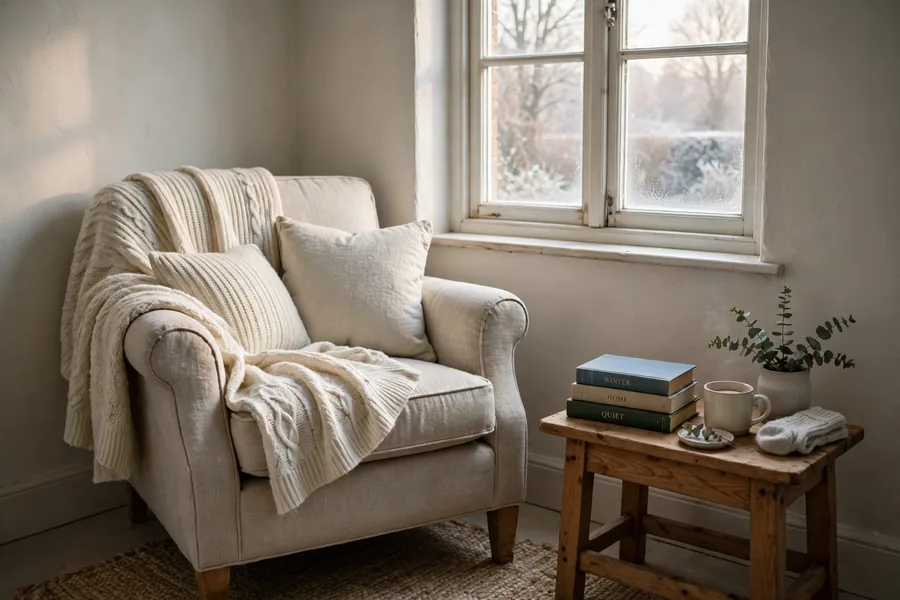
A bedroom corner is often the quietest spot in the house, especially before anyone else is awake. Place a comfortable chair there, angled away from the bed so it feels like a separate place, and add a small table for a book and a glass of water. Morning light in winter is pale and gentle, perfect for the first chapter of the day before the house wakes up. This nook doubles as a place to unwind at night, when a few pages before sleep beat scrolling through a bright screen.
13. A Window Bench With Book Storage Underneath
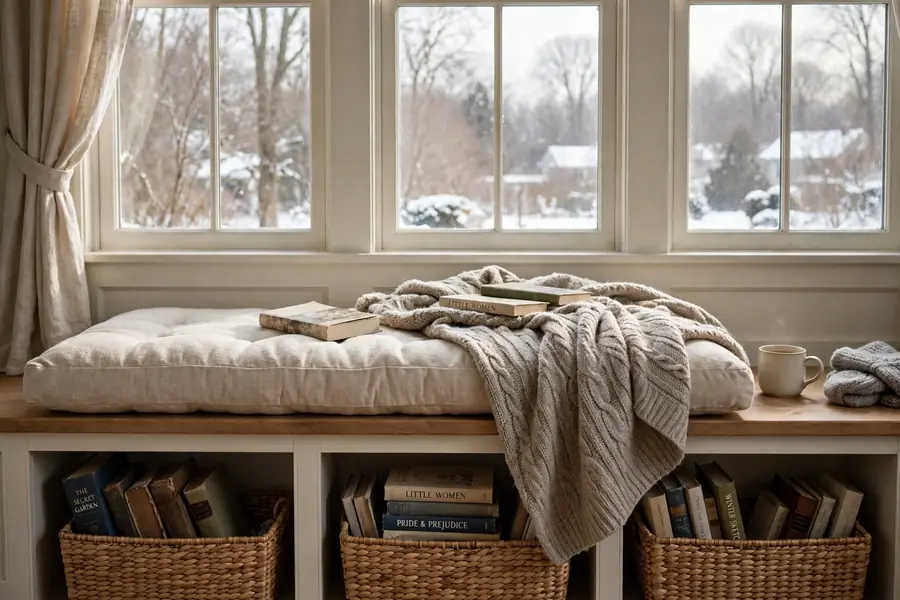
A window bench with storage underneath solves the two problems every reader has: where to sit, and where to put the books. Use baskets or low drawers under the bench for the books you are currently reading, and keep the finished ones on a shelf elsewhere. The bench itself should be deep enough to sit cross-legged, with a cushion thick enough for an hour without fidgeting. Add a throw in a colour that makes you smile, because you will see it every time you walk past and it will quietly invite you to sit down.
14. A Daybed Dressed For Winter Reading

A daybed is the most generous reading nook of all, because it lets you lie down properly with a book instead of perching. Dress it with a warm duvet, a stack of pillows for propping yourself up, and a throw you can pull over your feet. The trick is to keep it feeling like a reading spot rather than a second bed, so add a small shelf or a tray for books and tea at one end. On the coldest evenings, when even the thought of sitting upright feels like too much, a daybed nook is pure kindness to yourself.
15. A Chaise Lounge Facing A Bookshelf Wall
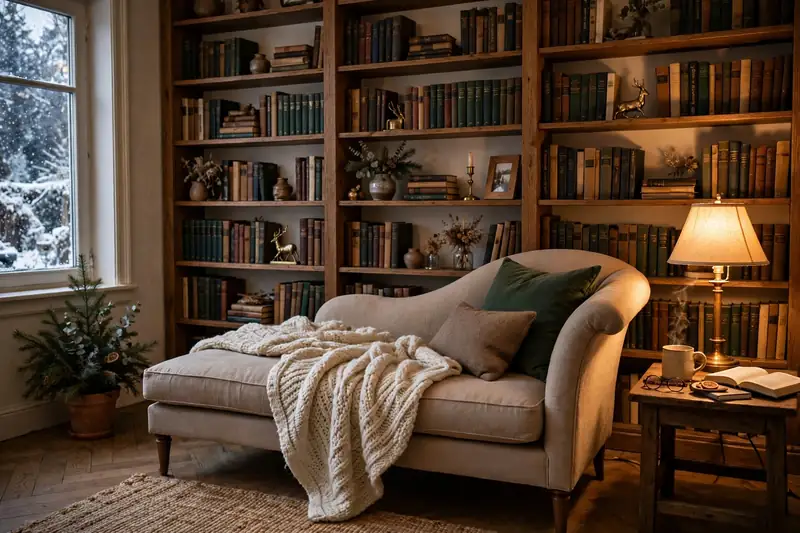
A chaise lounge facing a wall of books turns choosing your next read into part of the ritual. Stretch out with your feet up, a blanket over your legs, and the whole shelf in view like a menu of possible evenings. A lamp at the head end keeps the light on the pages rather than in your eyes, and a small stool beside the chaise holds tea and a bookmark. This nook suits readers who finish one book and immediately reach for another, because the next story is always right there in front of them.
16. A Low Bookshelf And Pouf For Tiny Spaces
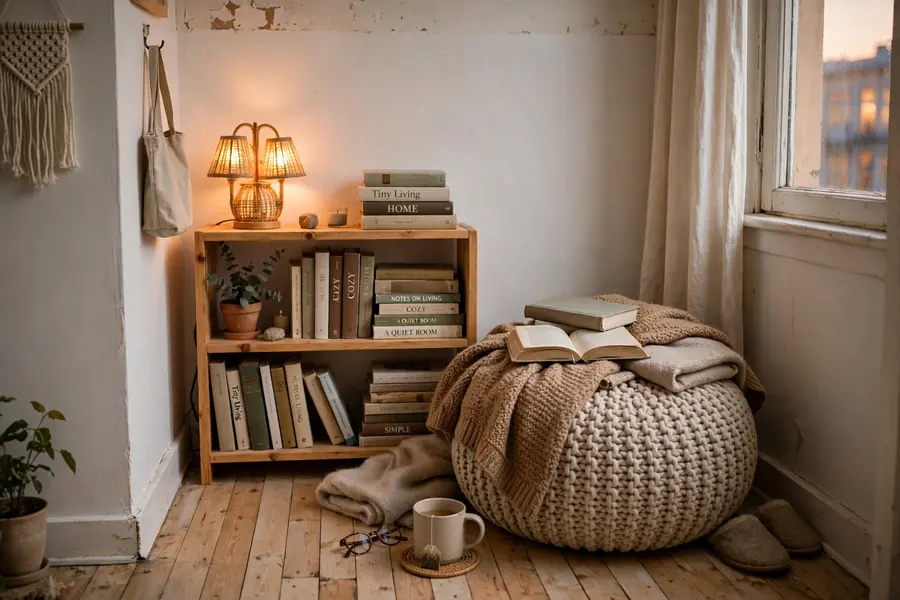
In a studio or a small flat, a low bookshelf and a pouf can be a complete nook in less than a metre of wall. The shelf holds a rotating stack of current reads, the pouf gives you a soft seat that can be moved wherever the light is best, and a wall lamp above saves precious floor space. The whole setup feels light and flexible rather than cramped, because nothing in it is too big to shift. It is a reminder that a reading nook is a habit first and furniture second, and the habit fits anywhere.
17. A Canopy-Draped Corner For Extra Shelter

Draping soft fabric over a corner, from a ceiling hook or a simple frame, creates a tent-like shelter that feels wonderfully private. Inside, a cushion, a blanket, and a small lamp are all you need, and the fabric softens both light and sound. This works especially well for readers who are easily distracted, because the canopy draws a gentle boundary around your attention. Keep the fabric light in colour so the nook does not feel dark, and let it billow slightly for that storybook feeling.
18. A Swivel Chair In A Spare Corner
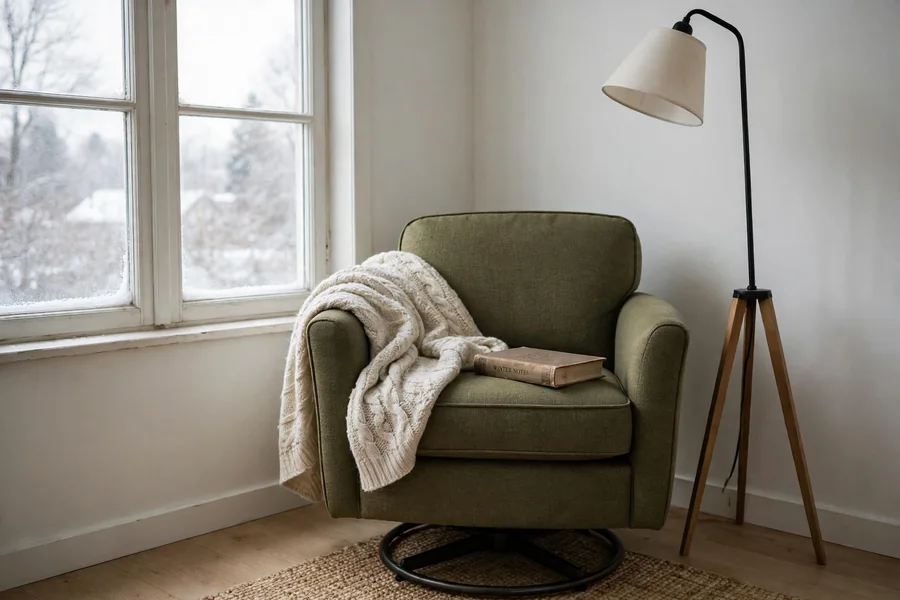
A swivel chair is a practical choice for a corner that also needs to serve other purposes during the day. Turn it toward the window for reading, and swivel it back toward the room when you want to talk or watch something with others. Choose one with a high back and soft upholstery so long chapters stay comfortable, and add a footstool that tucks away underneath. The swivel is a small luxury, but on a winter evening it means you can follow the last patch of daylight without moving the whole chair.
19. A Window Nook Strung With Warm Fairy Lights

When winter afternoons turn dark by four o’clock, fairy lights can rescue a window nook from gloom. String warm white lights along the window frame or a nearby shelf, and let their glow join the lamplight rather than replace it. The effect is gentle and golden, nothing like harsh overhead lighting, and it makes the nook feel festive without any seasonal decoration. Pair the lights with a thick blanket and a hot drink, and even a grey Tuesday evening starts to feel like a small celebration.
20. A Two-Chair Nook For Reading Together
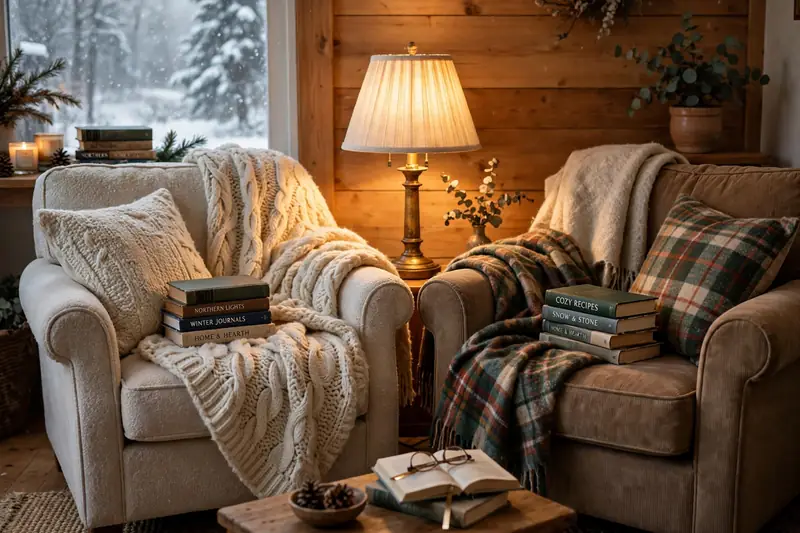
Reading does not have to be solitary, and a two-chair nook lets two people share the quiet without sharing a book. Place two comfortable chairs side by side, angled slightly toward each other, with a shared side table and a lamp that lights both seats. Each person gets their own blanket and their own story, but the companionable silence is its own kind of warmth. This is my favourite nook for winter weekends, when reading together feels like the gentlest way to spend time with someone.
21. A Minimal Nook With Just Chair, Lamp, And Stack
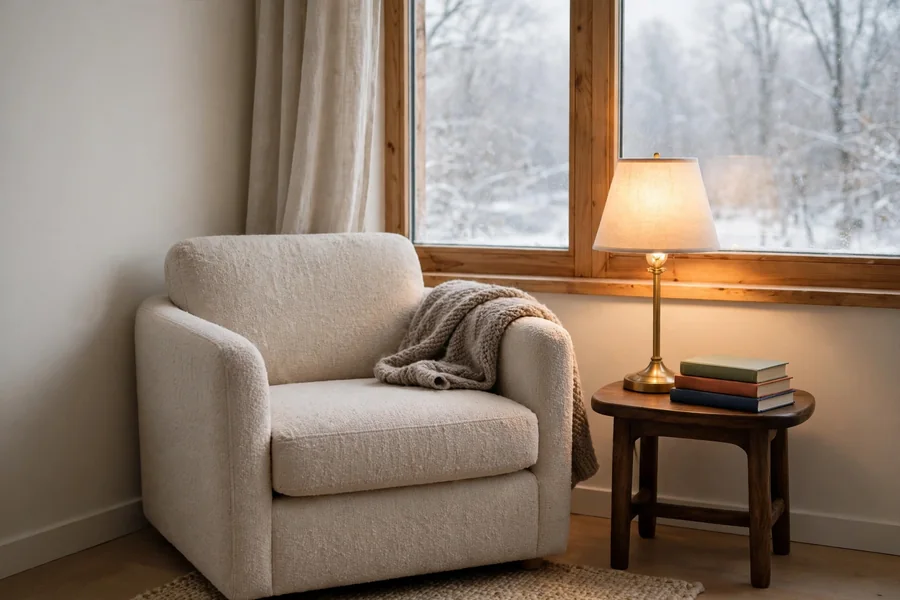
Sometimes the cosiest nook is the simplest one, and stripping back can be a relief after a house full of decorations. One good chair, one lamp with warm light, and one small stack of books is genuinely enough, and the empty space around them feels calm rather than bare. Choose the chair carefully, because in a minimal nook there is nothing to distract from an uncomfortable seat. The discipline here is lovely too, because each new book only joins the stack when the last one is finished.
22. A Kitchen Corner For Tea And Chapters
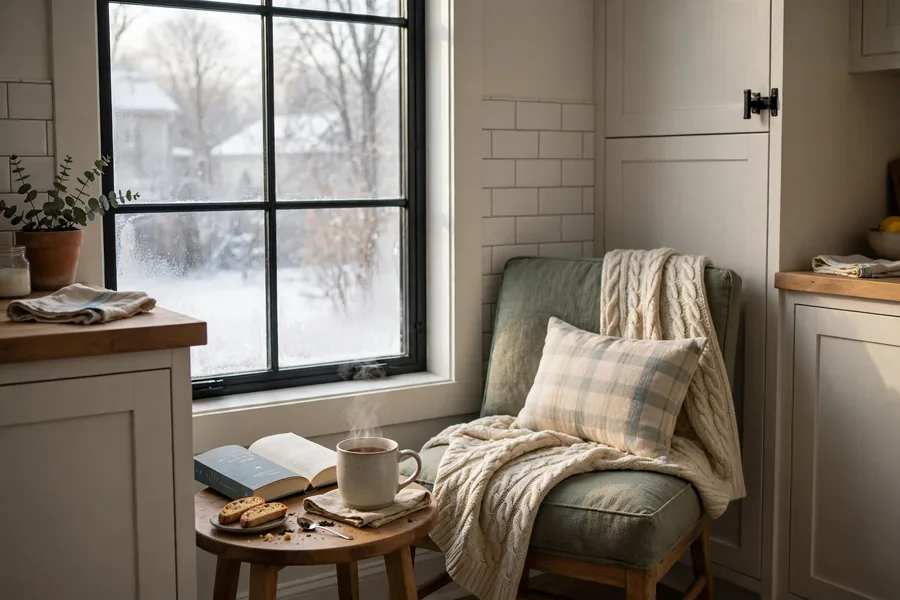
A quiet kitchen corner, away from the cooking mess, makes a lovely daytime nook because the kettle is always close by. A small armchair or a cushioned bench by a kitchen window, with a tiny table for tea and a book, turns waiting for dinner or a pot to boil into reading time. Morning light in a kitchen is often the best in the house, bright and practical, and the smell of tea and toast only adds to the comfort. Keep the book stack small here, just the current read and the next one, so the corner stays useful for everyone.
23. A Landing Nook On The Stairs
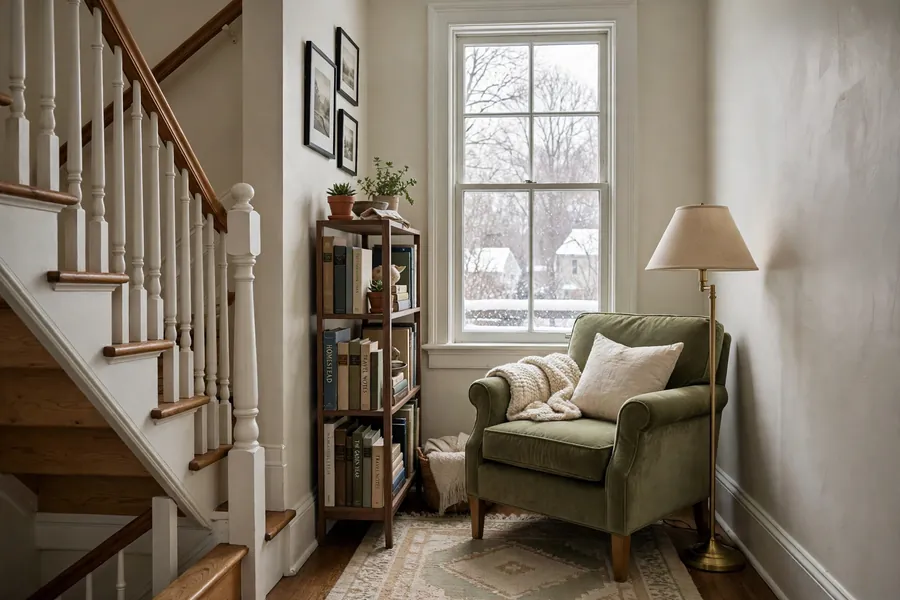
A wide landing is easy to walk past without noticing, but it can hold a chair, a narrow bookshelf, and a lamp without blocking the way. The advantage is privacy, because landings are rarely the centre of household traffic, and the light from a stairwell window is often soft and steady. Add a rug to warm the floor and a blanket over the chair, and the landing stops being a passage and becomes a destination. It is a particularly good nook for teenagers or anyone who wants a reading spot that feels a little bit their own.
24. A Sunroom Corner For Pale Winter Light
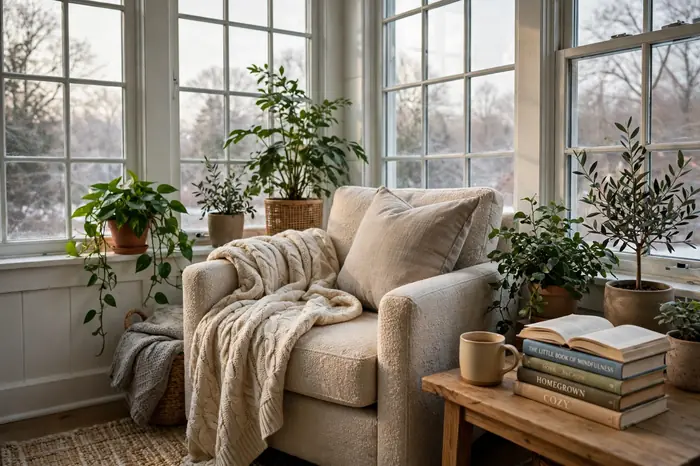
If you have a sunroom or a glassed-in porch, even a small corner of it makes a beautiful winter nook because the light is so generous. The glass keeps the cold out while letting in every bit of pale winter sun, and a few plants nearby make the corner feel alive when the garden outside is bare. Choose a chair with washable covers, since sunrooms can be draughty, and layer a thick blanket for the chillier hours. Reading here feels like borrowing a little bit of outdoors, without ever leaving the warmth.
25. A Night-Time Nook For The Last Chapter Before Bed
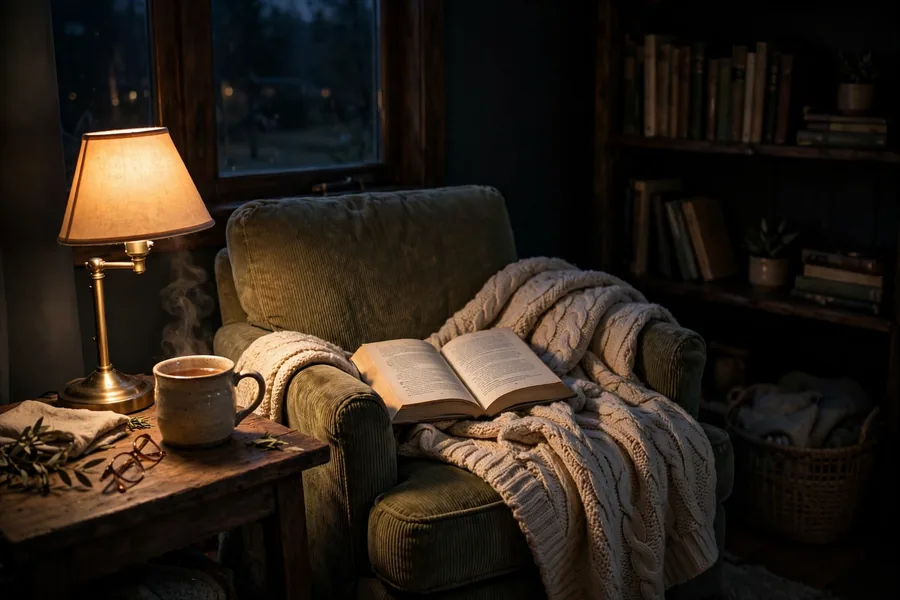
The last nook is for the end of the day, when the house is quiet and the lamp is the only light still on. Keep the lighting low and warm, the blanket close, and a small tray for tea or water so you do not have to get up. This nook is less about furniture and more about ritual, the same chair, the same lamp, the same ten pages before sleep. Over a winter, that ritual becomes something you look forward to all day, a gentle full stop at the end of every evening.
7 Small Things That Make A Reading Nook Feel Finished
- A warm lamp with a shade that softens the light, placed behind your shoulder rather than in front of your eyes.
- A blanket that lives on the chair itself, not folded in a cupboard, so you actually reach for it.
- A small table or shelf within arm’s reach for tea, glasses, and the book you will read next.
- A rug underfoot, even a small one, because cold floors undo cosiness faster than anything else.
- A basket or low shelf for current reads, so finished books do not pile up on the seat beside you.
- A cushion for your lower back, even in a deep chair, because comfort over an hour matters more than looks.
- Something that smells good nearby, a candle, a cup of tea, or a pine sprig in winter, to mark the nook as a place for slowing down.
How To Choose The Right Reading Nook For Your Home
Start with light, because light decides whether a nook gets used or merely admired. Watch where daylight falls in your home on a winter afternoon, and notice which corners stay bright longest and which ones turn gloomy by three o’clock. A nook beside a window will almost always beat a nook in a dark hallway, unless you are willing to invest in a genuinely good lamp. If your only free corner is dim, choose warm, layered lighting and pale cushions to lift it, rather than fighting the darkness with a single harsh bulb.
Next, be honest about how you actually read, not how you wish you read. If you sprawl, you need a daybed or floor cushions rather than an upright chair, however beautiful it looks in a photograph. If you read for ten minutes at a time between other things, a chair near the kitchen or the living room will serve you better than a secluded attic corner you rarely climb to. The right nook fits your real evenings, your real back, and your real house, and it is the one you keep returning to without having to persuade yourself.
Finally, let the nook grow slowly instead of buying everything at once. Start with a chair and a lamp, read there for a week, and notice what you miss: a place for tea, a warmer blanket, a shelf for the next book. Each addition then solves a real annoyance rather than filling a shopping list, and the nook ends up feeling personal instead of staged. A reading nook built this way, one small comfort at a time, is the one that will still be in daily use when spring arrives.
Final Thoughts
A reading nook is not really about furniture at all, it is about giving yourself permission to sit still for a while. Winter gives us that permission more generously than any other season, with its early dark, its cold windows, and its long evenings that ask for nothing more than warmth and a good story. Whether your nook is a window seat, a closet hideaway, or simply a chair turned toward the light, the best one is the one that makes you reach for a book instead of your phone.
If you are still deciding where to put yours, start with the smallest version you can: a chair, a lamp, a blanket, and one book you have been meaning to read. You can add shelves and cushions later, but the habit comes first, and the habit only needs an evening and a little quiet. For more ideas on warming up the room around your nook, these cozy bedroom decor ideas pair beautifully with a reading corner tucked into a bedroom.
Now I would love to hear from you: which of these nooks feels most like yours, and what book would you reach for first on a slow, snowy evening in it?