- Overview
- History & Native American Legend
- Hours & Entry Fees
- Complete Trail Guide
- Waterfall Guide
- Best Time to Visit
- Wildlife Guide
- Lodge, Camping & Cabins
- Video Preview
- Location & Parking
- Family, Dogs & Accessibility
- Nearby Attractions & Day Trip Plan
- What Visitors Say
- Insider Tips & Common Mistakes
- FAQs
Overview
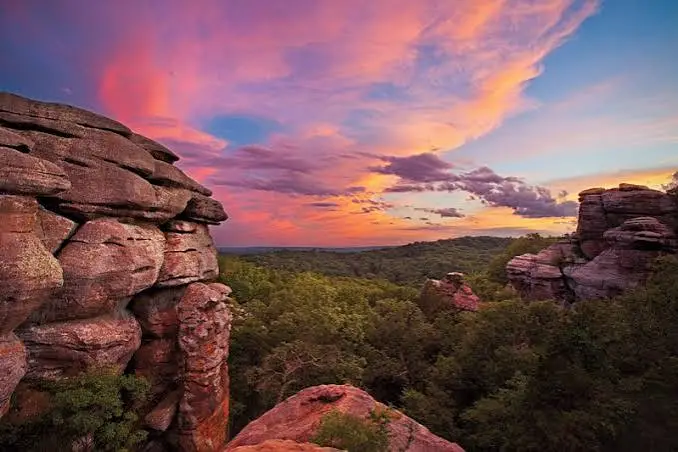
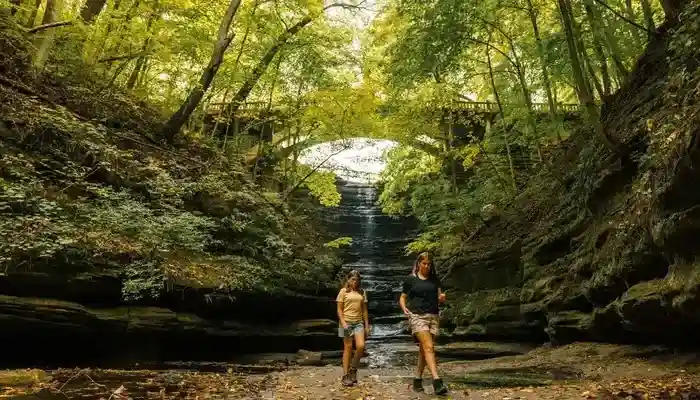
Starved Rock State Park sits along the Illinois River in Utica, LaSalle County, roughly 90 minutes southwest of Chicago. Carved out of St. Peter sandstone over thousands of years, the park is known for its 18 canyons, seasonal waterfalls, sweeping river overlooks, and a namesake sandstone butte tied to a well-known piece of local legend.
With around 13 miles of trails winding through canyons like French Canyon, Wildcat Canyon, and St. Louis Canyon, Starved Rock draws over two million visitors a year, making it one of Illinois' most-visited state parks. A first-time visitor could easily assume it's a single short hike, but between the canyons, the lodge, the river, and the wildlife, it's really a full day (or full weekend) destination.
History & Native American Legend
The park takes its name from a legend involving a group of Illiniwek people who, according to the story, were besieged atop the 125-foot sandstone bluff by rival Potawatomi and Ottawa forces after the death of Chief Pontiac in the 1760s, and starved rather than surrender. Historians debate the exact details, but the name has stuck for well over a century.
Long before that, the site sat along a major regional trade and travel corridor on the Illinois River, used by French explorers such as La Salle and Tonti, whose fort once stood nearby. The park was established in the early 1900s and later saw extensive stonework, trails, and shelters built by the Civilian Conservation Corps in the 1930s, much of which is still in use today.
Hours & Entry Fees
Starved Rock State Park is free to enter, with no admission fee and no parking fee. The park's trails are open from 7 a.m. until sunset, and the Visitor Center runs 9 a.m. to 4 p.m. daily, closing on federal holidays from November through March.
Complete Trail Guide
The park's roughly 13 miles of trails connect a series of canyons running along the bluffs above the Illinois River. Here's how the main routes stack up:
| Trail / Canyon | Distance | Difficulty | Highlights |
|---|---|---|---|
| Starved Rock Overlook | ~0.5 miles round trip | Easy | River views, quickest hike in the park |
| French Canyon | ~2 miles round trip | Moderate | Seasonal waterfall, sandstone walls |
| Wildcat Canyon | ~2 miles round trip | Moderate | Deep canyon, popular waterfall |
| St. Louis Canyon | ~3 miles round trip | Moderate | One of the tallest waterfalls in the park |
| LaSalle Canyon | ~4 miles round trip | Moderate–Difficult | Waterfall, ice formations in winter |
| Eagle Cliff | ~1 mile round trip | Easy–Moderate | River overlook, good eagle-watching spot |
| Lover's Leap | ~1 mile round trip | Easy | Classic photo overlook near the Lodge |
Trail conditions change with the seasons and ongoing construction, so treat these distances as approximate and always check current trail status at the Visitor Center before setting out.
Waterfall Guide
Starved Rock's waterfalls are seasonal, fed mostly by snowmelt and rainfall rather than a constant spring source, which is exactly why timing your visit matters.
| Waterfall | Best Season | Notes |
|---|---|---|
| French Canyon Falls | Spring, after rain | Short walk, family-friendly |
| Wildcat Canyon Falls | Spring, winter | One of the most photographed falls |
| St. Louis Canyon Falls | Spring | Taller drop, quieter trail |
| LaSalle Canyon Falls | Winter | Frozen ice curtain forms in cold snaps |
Best Time to Visit
- Spring: Peak waterfall season and wildflower blooms, though trails can be muddy.
- Summer: Warm, green canyons and the busiest crowds, especially on weekends.
- Fall: Widely considered the best season, with layered autumn foliage across the bluffs.
- Winter: Quieter trails and dramatic ice formations, especially in LaSalle and Wildcat Canyons, plus a reliable window for spotting bald eagles along the river.
Wildlife Guide
The Illinois River corridor near the park is one of the better-known wintering spots for bald eagles in the state, drawing birdwatchers from across the Midwest between December and February. Deer, wild turkey, and a wide range of songbirds are common along the trails year-round, and the canyons support their own microclimates with ferns and mosses that thrive in the shaded, damp conditions.
Lodge, Camping & Cabins
The Starved Rock Lodge sits inside the park and offers a historic stone-and-timber great room, a restaurant, and an indoor pool, alongside standalone cabins scattered through the woods near the Lodge. The park's campground has both tent and RV sites and tends to fill up quickly on summer weekends, so booking ahead is worth it if you want to stay overnight rather than day-trip.
Video Preview
Location & Parking
Starved Rock is located in Utica, Illinois, in LaSalle County, about 100 miles southwest of Chicago, with the park address at 2668 E. 950th Road, Oglesby, IL 61348. From Chicago, take I-80 West to Route 178 South, a straightforward drive that usually runs about 1.5 to 2 hours depending on traffic.
Parking lots are located near the Visitor Center, at several trailheads, and near the Lodge, all on a first-come, first-served basis with no parking fee.
Family, Dogs & Accessibility
Shorter routes like the Starved Rock Overlook and Lover's Leap trails are manageable for most families with young kids, while longer canyon hikes involve stairs, uneven sandstone, and some steep drop-offs, so supervise children closely near overlooks. Dogs are welcome on the trails but must be kept on a leash at all times, and swimming is not permitted anywhere in the canyons, waterfalls, or river.
The Visitor Center and Lodge area are accessible, but most of the canyon trails involve natural, uneven terrain, stairs, and narrow footpaths that are not wheelchair accessible. If mobility is a concern, the river overlooks near the Lodge are the most accessible way to experience the park's views.
Nearby Attractions & Day Trip Plan
Matthiessen State Park, with its own canyon system, is about 10 minutes away and pairs naturally with a Starved Rock visit. Buffalo Rock State Park and the small river town of Utica, home to the LaSalle County Historical Museum, are also nearby, along with river cruise operators that run seasonal boat tours on the Illinois River.
Sample One-Day Plan
- Morning: Arrive early, start at the Visitor Center, then hike French Canyon and Wildcat Canyon.
- Midday: Lunch at the Lodge restaurant or a picnic area.
- Afternoon: Drive or walk to Lover's Leap and Eagle Cliff for river views.
- Late afternoon: Short drive to Matthiessen State Park for a second canyon hike if you have energy left.
What Visitors Say
Many visitors are surprised that a park this scenic, with real canyons and waterfalls, is completely free to enter.
Winter visitors often describe the frozen waterfalls in LaSalle Canyon as one of the most memorable sights they've seen in Illinois.
Weekend crowds on the main trails can be heavy, so early arrival is frequently recommended by regular visitors.
Families traveling with kids often point to the shorter overlook trails as a low-effort way to see the best views.
Insider Tips & Common Mistakes
- Arrive before 9 a.m. on weekends; the main lots near the Visitor Center fill up fast in spring and fall.
- Wear real hiking boots or trail shoes — the sandstone stairs get slick when wet.
- Check current trail closures before your visit, since the 2026 improvement project affects several routes.
- Don't expect full waterfalls in a dry summer; plan for spring or right after rainfall if that's your priority.
- Bring cash or a card for the Lodge and gift shop, since some smaller concessions may not take all payment types.
- Common mistake: trying to do every canyon in one visit. Pick 2–3 trails and actually enjoy them rather than rushing the whole park.
Frequently Asked Questions
Is there an entrance fee for Starved Rock State Park?
No, the park is free to enter and parking is free as well, with no admission or parking fee charged.
What are Starved Rock's hours?
Trails are open from 7 a.m. until sunset daily, and the Visitor Center is open 9 a.m. to 4 p.m. daily, closing on federal holidays from November through March.
Are dogs allowed at Starved Rock?
Yes, dogs are allowed on the trails but must remain on a leash at all times.
Are there trail closures in 2026?
Yes, several trails including parts of French Canyon, Brown Bluff, Campanula, and Tonti Canyon were closed for a major trail improvement project through at least June 2026. Check current park updates before visiting.
Can you swim in the waterfalls or river?
No, swimming is not permitted in any of the canyons, waterfalls, or the Illinois River within the park.
What is the best time to see the waterfalls?
Spring, especially after rain or snowmelt, gives the fullest waterfalls. Winter offers striking frozen ice formations instead of flowing water.
How far is Starved Rock from Chicago?
It's about 100 miles southwest of Chicago, roughly a 1.5 to 2 hour drive via I-80 West to Route 178 South.